How to Make Thin Hair Look Thicker: Haircut and Styling Guide for Men
Published: 7 Nov 2026
You know the feeling. You step out of the shower, towel off, and catch your hair in the mirror while it is still damp. The strands lie flat, the scalp shows through at the crown, and the style you had in mind looks nothing like the one staring back at you. Thin hair is not a flaw, but it does need a different plan. Long, heavy hair pulls itself down, and a flat part can turn a small thin patch into the first thing anyone notices.
The good news is that a smart haircut does most of the work for you. This guide shows you how to make thin hair look thicker haircut by haircut, with the right length, the right layers, a little texture, some colour depth and a simple blow dry routine that can make the same hair look visibly fuller in one appointment, so you can walk into the barbershop knowing exactly what to ask for.
Why Thin Hair Looks Flat (and How a Cut Changes It)
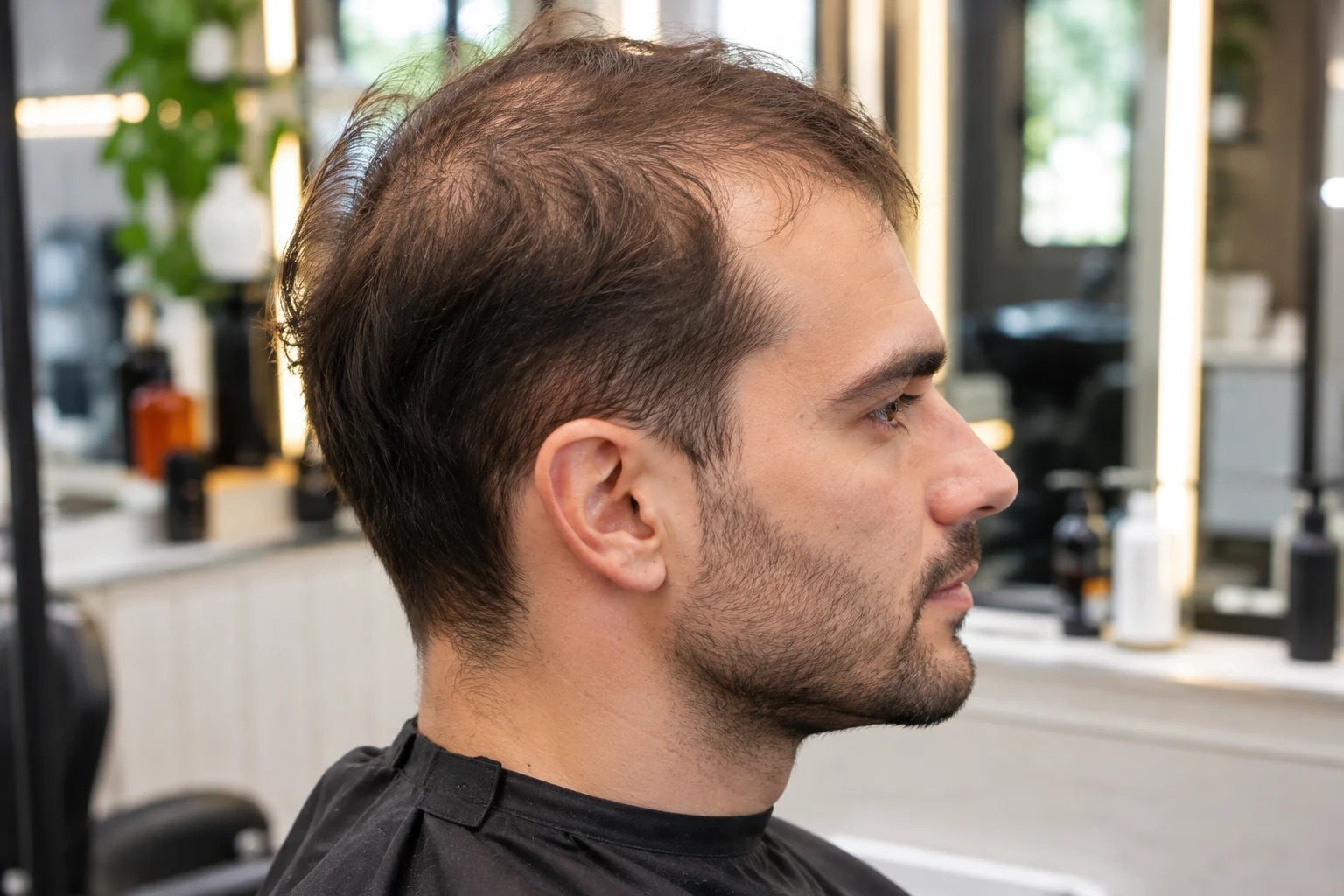
Thin hair and fine hair are not quite the same thing, and the difference matters when you choose a cut. Fine hair means each strand is thin. Thin hair means you have fewer strands, so more scalp shows through. Many men have both, and both make hair lie close to the head, show a part line too clearly, and lose volume as soon as oil or sweat builds up. Stress, age, family history and a dry or irritated scalp can all make the problem worse, and losing 50 to 100 hairs a day is normal, so a few hairs in the shower drain are not a reason to panic.
I found that out by trial and error after growing my hair long to hide a thin crown. The extra length only pulled the top flatter and made the crown more obvious. When I finally cut it short, kept the ends blunt and let the top stand up a little, people asked if I had grown more hair. I had not. The cut had simply stopped working against me.
A good cut changes three things at once. It shortens the lever that pulls hair flat, it puts weight where you want it, at the ends and at the crown, and it breaks up the flat surface with texture, so light and shadow do the work that extra strands cannot. That is why this guide starts with the cut, and only then moves to colour, blow drying and products. No styling product can rescue a shape that fights your hair.
The Haircut Rules That Add Fullness First
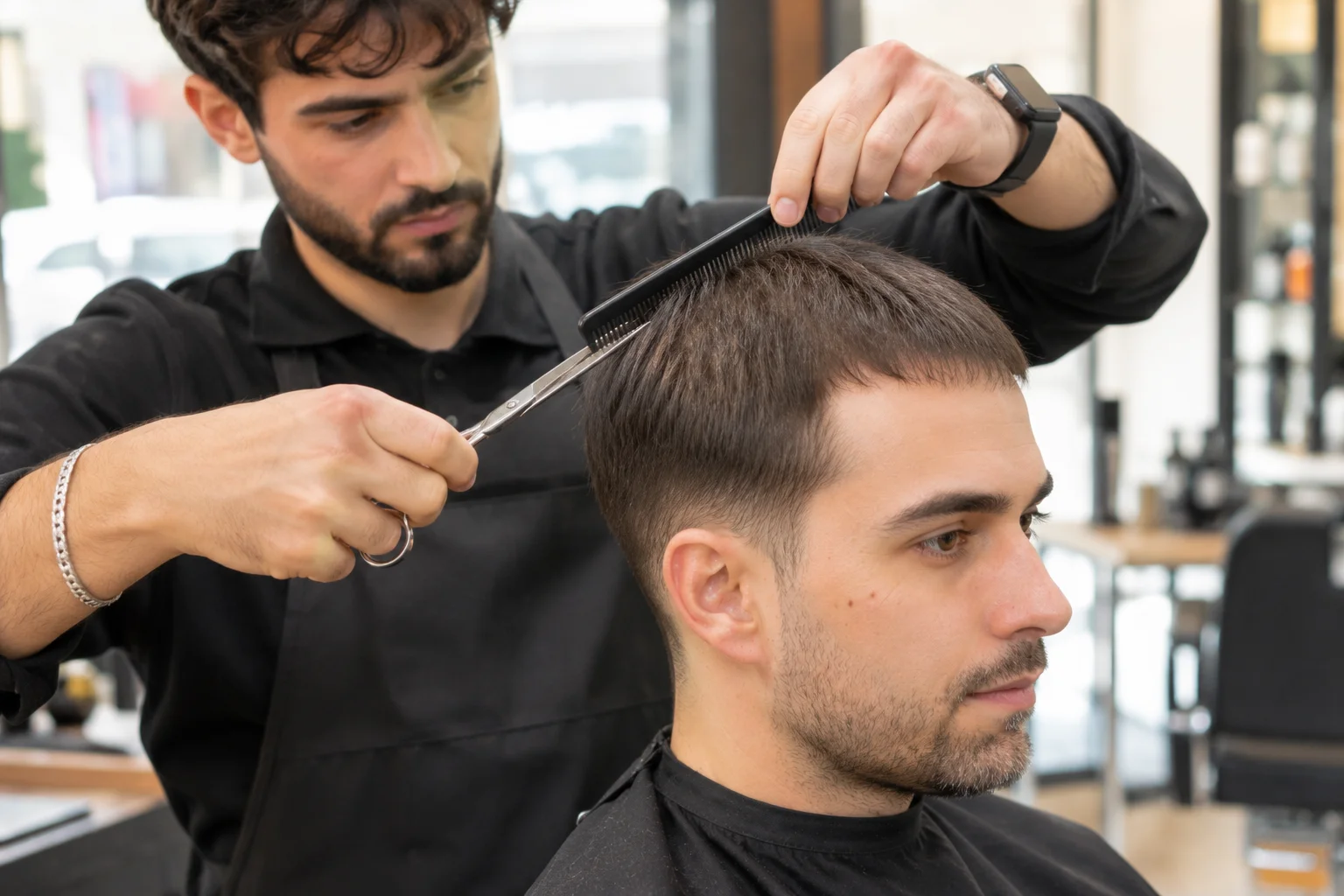
Before you pick a style, learn the rules that make almost every thin hair cut work. First, go shorter than you think you need. Short hair stands up more easily, dries faster, and does not drag the roots down. Second, keep the ends blunt. A clean, straight baseline makes the bottom edge look solid, while wispy, thinned out ends make hair look even thinner. Third, book a trim every four to six weeks. Split ends travel up the strand, fray the edge, and make the whole cut look tired.
Ask your barber to skip the thinning shears on top. Thinning out sounds helpful, but it removes bulk you cannot spare. If your barber reaches for them, ask for texture by point cutting instead, which is covered in the next section. Keep the sides neat with a taper or a low fade so the top looks fuller by contrast, and avoid growing the top long while the sides stay long too. That shape hides nothing and weighs everything down. Finally, bring a photo of the cut you want, and tell your barber where your hair looks thinnest, at the crown, the hairline or the part. A good barber will cut around that spot instead of cutting through it.
Layering and Texture: How to Ask Your Barber for More Volume
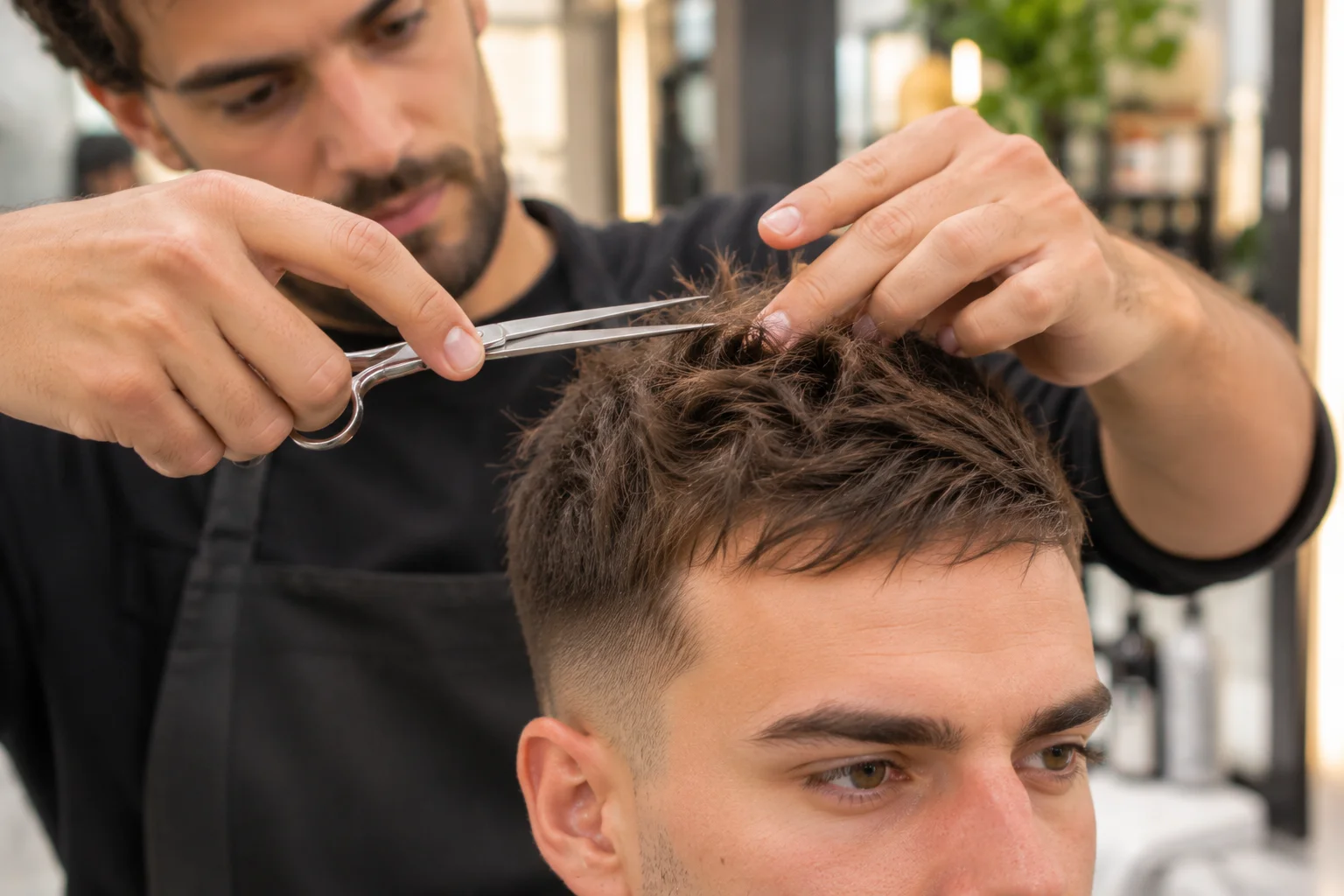
Layers are where most thin hair cuts go wrong, so it helps to know exactly what to ask for. Long layers remove weight from the ends and leave the top looking stringy, which is the opposite of what you want. Short layers at the crown are different. They lift the roots, let the top move, and create small shadows between strands that read as thickness. The layers should be short, clean and mostly on top, with the outline kept strong underneath.
Texture is the finishing touch that makes layers work. Ask for point cutting, where the barber cuts into the ends with the tips of the scissors, instead of a razor, which can shred fine strands and make them look frizzy. A little choppy texture through the front and crown gives your hair something to grip, so a small amount of matte clay can hold it up all day. Too much texture, though, thins the ends again, so ask your barber to keep it light and to show you how the top falls before you leave the chair.
Short Cuts That Make Thin Hair Look Thicker for Men
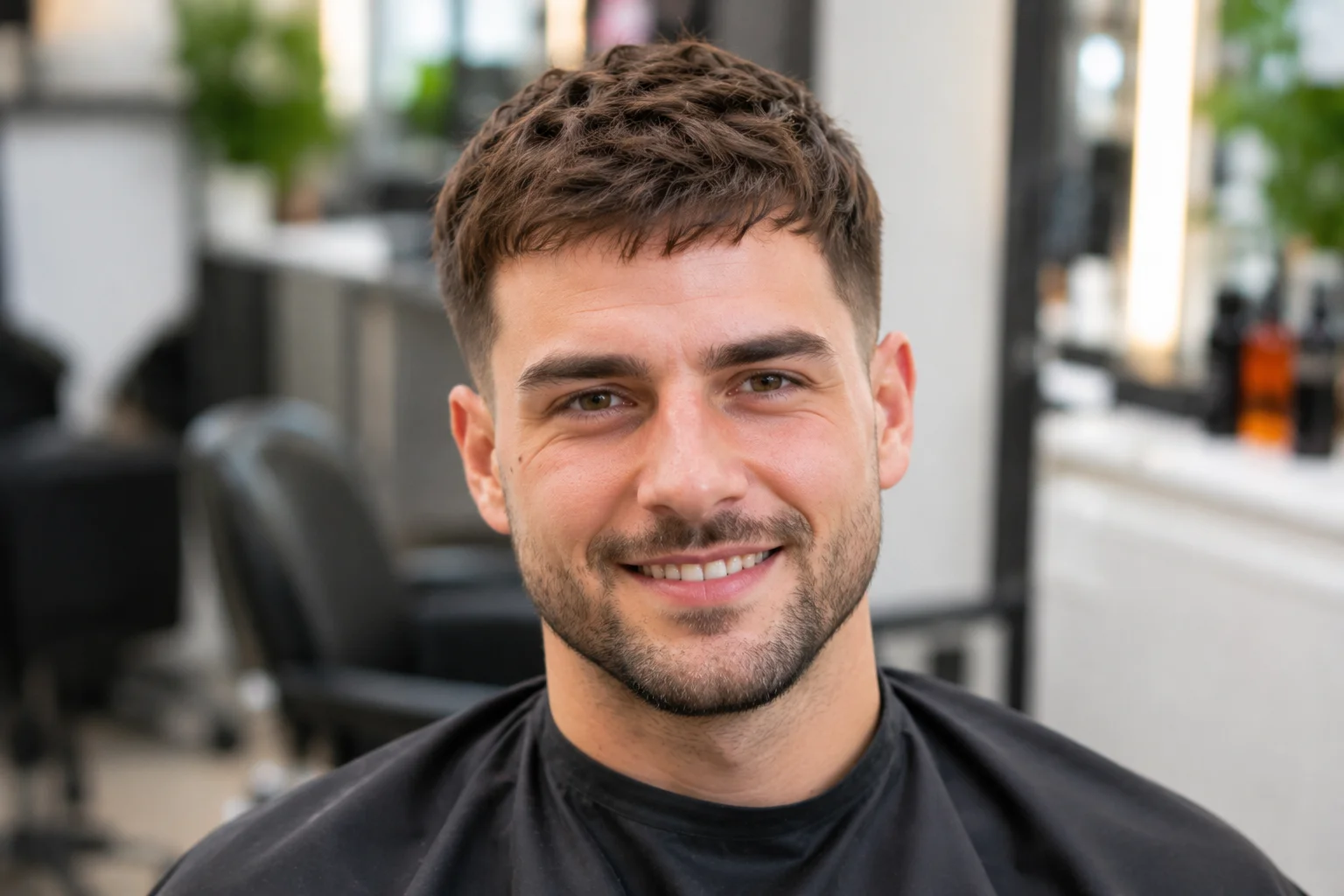
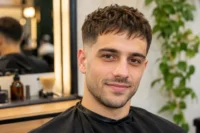
Short cuts suit thin hair because they remove the weight that pulls it flat and let the roots stand up. A short blunt crop is the simplest choice: the top is cut to one even length, the ends stay solid, and the fringe is worn forward so the hairline looks full. A textured crop adds short choppy layers on top, which works well if your hair is straight and tends to sit in one flat sheet. Push the front up and forward with a little matte clay, and the texture breaks up the scalp showing through.
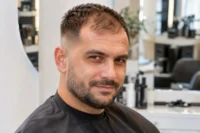
Keep some length at the front if your hairline is moving back. A longer front, swept to the side or worn forward as a short fringe, covers more forehead and frames the face, while the back and sides stay short. Pair the top with a taper or a low taper fade, which fades the sides gradually and makes the top look thicker by contrast. A very high skin fade can do the opposite, because the sharp contrast draws the eye to how little hair is on top, so ask for a low, soft fade instead.
Two shapes to avoid are the combover and the long flat style. Combing long hair over a thin patch may cover it indoors, but wind, rain and bright light undo it in seconds, and the thin strands look thinner once they are stretched across the scalp. A short, honest cut always looks fuller than a long cut that is trying to hide something. If you are not sure which short cut suits your face shape, ask your barber to try a textured crop first, since it is easy to adjust at the next visit.
The Part and the Front: Small Changes That Hide a Thin Hairline

Your part is a line of bare scalp, so where you put it changes how thin your hair looks. A centre part splits the hair into two thin curtains and shows the scalp straight down the middle, which rarely helps. A deep side part moves that line to one side, piles more hair on the fuller side, and lets the fringe fall across the hairline. Try moving your part about two fingers to the side of your usual line and see how much fuller the top looks.
The front matters most if your hairline is thinning. Keep the fringe a little longer than the crown, wear it forward or sweep it to the side, and avoid pulling it straight back, which opens the whole hairline to view. A soft, slightly messy fringe looks thicker than a sharp, straight one, because the uneven edge breaks up the line where hair meets forehead. If your barber cuts the fringe too short, the next four weeks will feel long, so ask for it to be left a touch longer than you think you need.
Colour and Dimension That Make Hair Look Denser

Colour works by changing how much scalp shows, not by changing your hair. A shade close to your scalp tone makes the skin under your hair less obvious, while soft lowlights add shadow between strands and highlights add light on top, so the hair looks deeper and denser. A root shadow, where the colour at the roots is a little darker, hides a wide part, and a few subtle highlights through the crown catch the light as you move. Avoid harsh bleach and very light blonde all over, which can make thin hair look transparent and show the scalp even more.
How to Blow Dry Thin Hair for Volume That Lasts
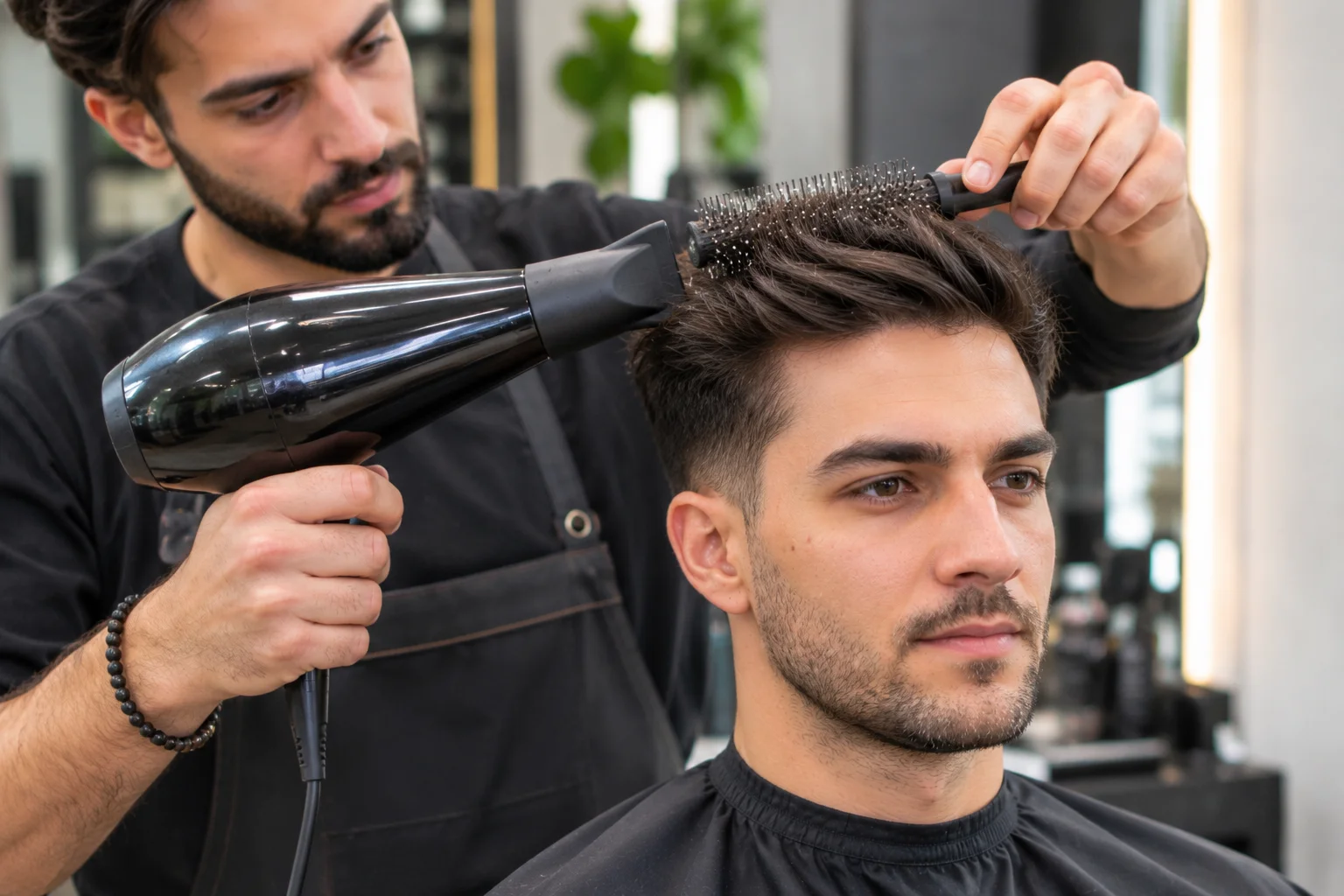
Blow drying is where most of the volume is made, and it takes about five minutes. Towel dry gently, add a small amount of volumising mousse at the roots, then dry with your head tipped forward or upside down until the hair is about three quarters dry. Lift each section at the roots with a round brush, aim the dryer at the roots first, and finish with a short blast of cool air to set the lift. Keep the heat on low or medium, use heat protectant every time, and do not brush the hair flat while it is still hot, or the volume will fall straight out.
Styling Products and Daily Care That Add Thickness Without Weighing Hair Down
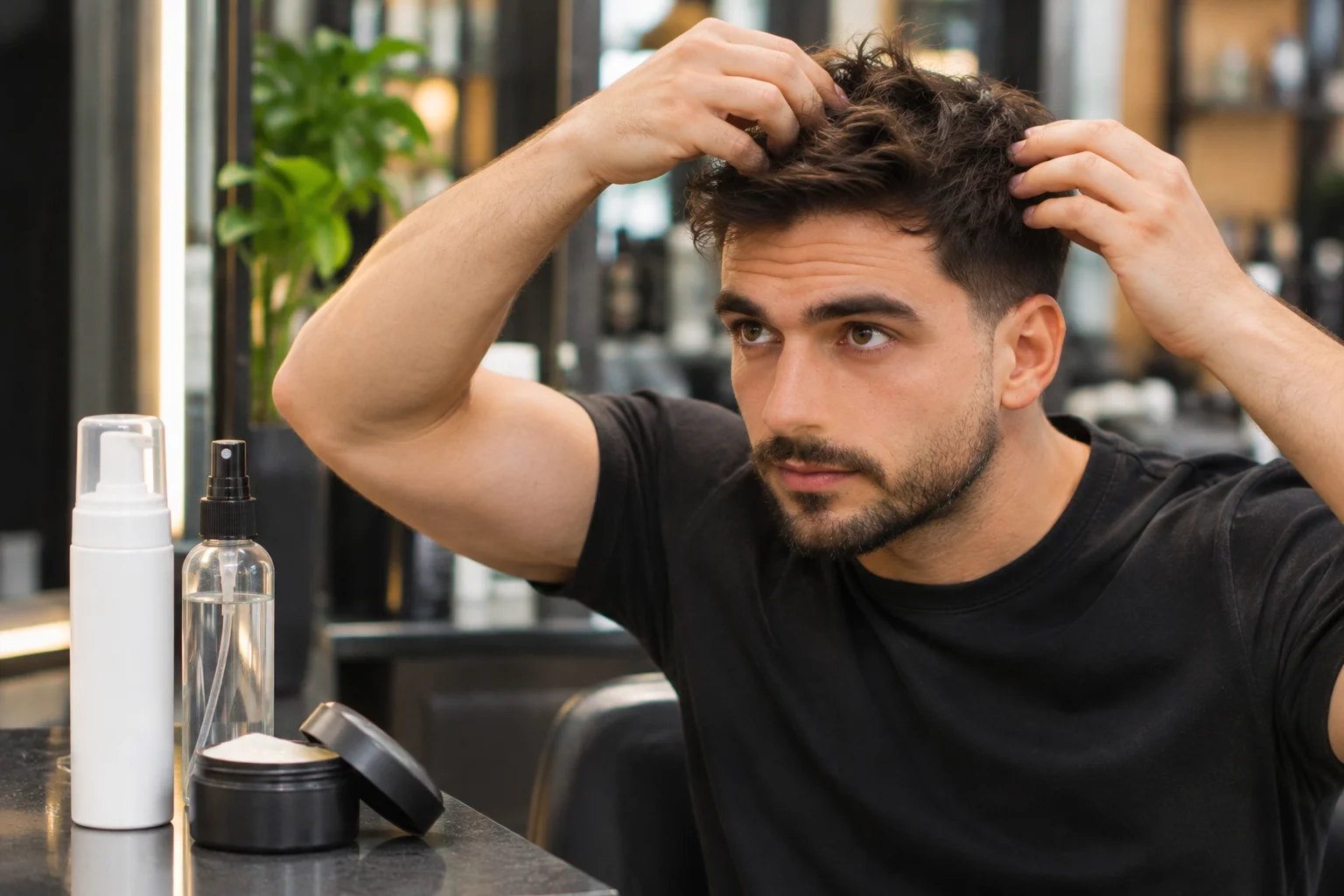
Choose light products and use less than you think. A volumising shampoo and a light conditioner, used on the ends only, keep the roots clean without coating them. Matte clay or a thickening pomade adds grip and hold, dry shampoo at the roots soaks up oil and lifts the hair between washes, and a texturising spray or sea salt spray adds roughness that helps fine strands hold their shape. Avoid heavy wax, thick oils and shiny gels, which glue strands together and make thin hair look thinner. Wash two or three times a week, exfoliate the scalp gently once a week, and massage the scalp while you wash.
When a Haircut Is Not Enough: Difficult Cases and Honest Limits
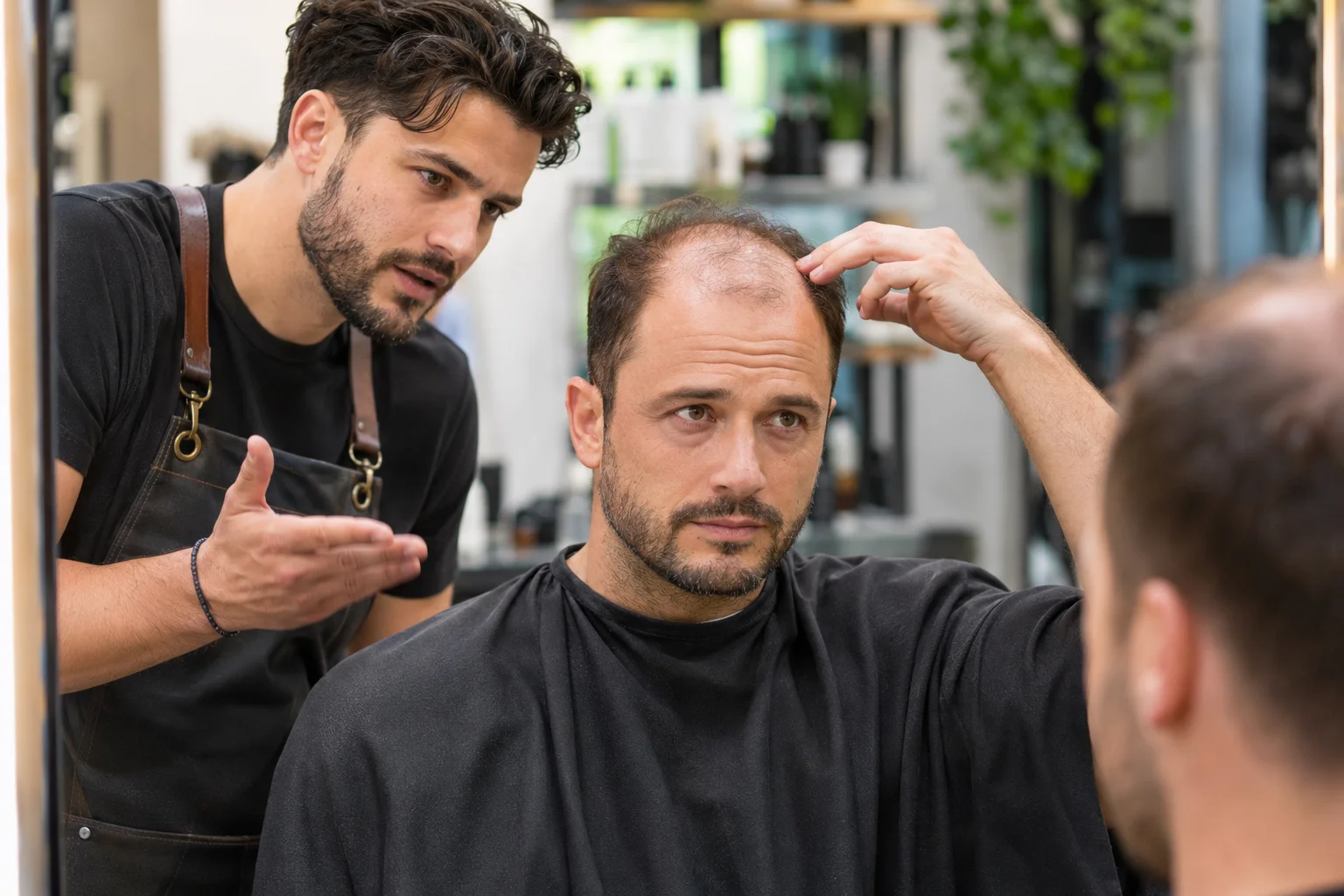
Be honest with yourself about how far a cut can go. If your crown is wide and bare, or your hairline has moved back a long way, no amount of texture will make the hair look thick, and a longer style will only show the gap more clearly. In that case a very short crop or a clean buzz cut is often the best-looking choice, because it makes the thin areas match the rest of the head. Hair fibres and root powder can help on the day, and a hair specialist can talk through longer term options, but a good barber will tell you the truth in the chair instead of selling you a style that cannot work. If you want to compare cut choices for more advanced thinning, read our guide to the best haircuts for thinning hair men and our guide to the best haircuts for a receding hairline.
Frequently Asked Questions
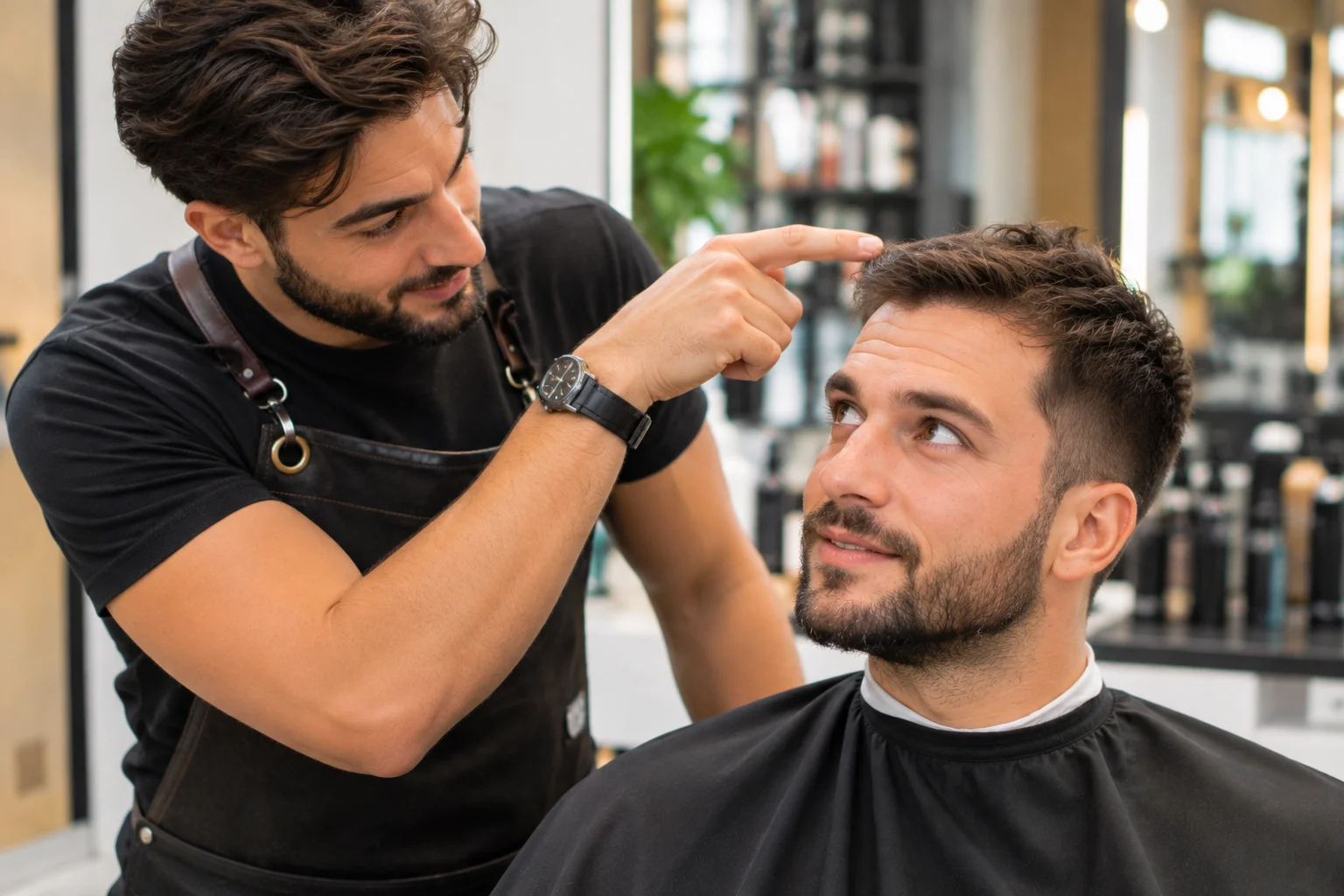
These are the questions I get asked most often about thin hair, and the short answers that can save you from a bad haircut.
A short textured crop with blunt ends and tapered sides. Keep the top short, add light texture at the crown, and wear the front forward.
Thicker, if the layers are short and only on top. Long layers remove weight and make thin hair look stringy, so keep the outline solid.
Every four to six weeks. Short styles lose their shape fast, and blunt ends go wispy quickly once split ends appear.
Yes. Lowlights add shadow, a root shadow hides a wide part, and a shade close to your scalp makes less skin show through.
Blow dry the roots up with a round brush, finish with cool air, and use a small amount of matte clay or dry shampoo at the roots.
Thin hair looks thicker when the cut, the colour, the blow dry and the products all work in the same direction. Keep the top short and blunt, add light texture at the crown, move the part to the side, add a little colour depth, and dry the roots up instead of flat. Book your next cut before the ends go wispy, try the routine for two weeks, and adjust one thing at a time until the mirror shows the fuller hair you already have.




- Be Respectful
- Stay Relevant
- Stay Positive
- True Feedback
- Encourage Discussion
- Avoid Spamming
- No Fake News
- Don't Copy-Paste
- No Personal Attacks
- Be Respectful
- Stay Relevant
- Stay Positive
- True Feedback
- Encourage Discussion
- Avoid Spamming
- No Fake News
- Don't Copy-Paste
- No Personal Attacks
