French Crop for Receding Hairline
Published: 27 Nov 2026
A French crop for receding hairline is a short haircut with the top brushed forward into a short fringe and the sides faded or tapered. It works so well for a receding hairline because the fringe sits over the front of the hair, exactly where the line starts to move back at the temples. Instead of exposing the recession, the cut turns the front into a clean, straight edge that looks deliberate.
I have cut this style on clients whose hairlines started to move back at the temples, and the change takes only a few minutes in the chair. The top stays short enough to hold its shape, the fringe falls forward, and the sides stay clean. In the morning it takes about 30 seconds to style, and it still looks tidy on day four without much effort.
This guide covers what a French crop is, how the fringe hides a receding line, who it suits and who should skip it, how long to keep the fringe, which fade to ask for, what to say to your barber, and how to style and maintain the cut. If your recession is at the temples and no further along than about Norwood 3, this is one of the simplest cuts that still looks sharp.
What Is a French Crop
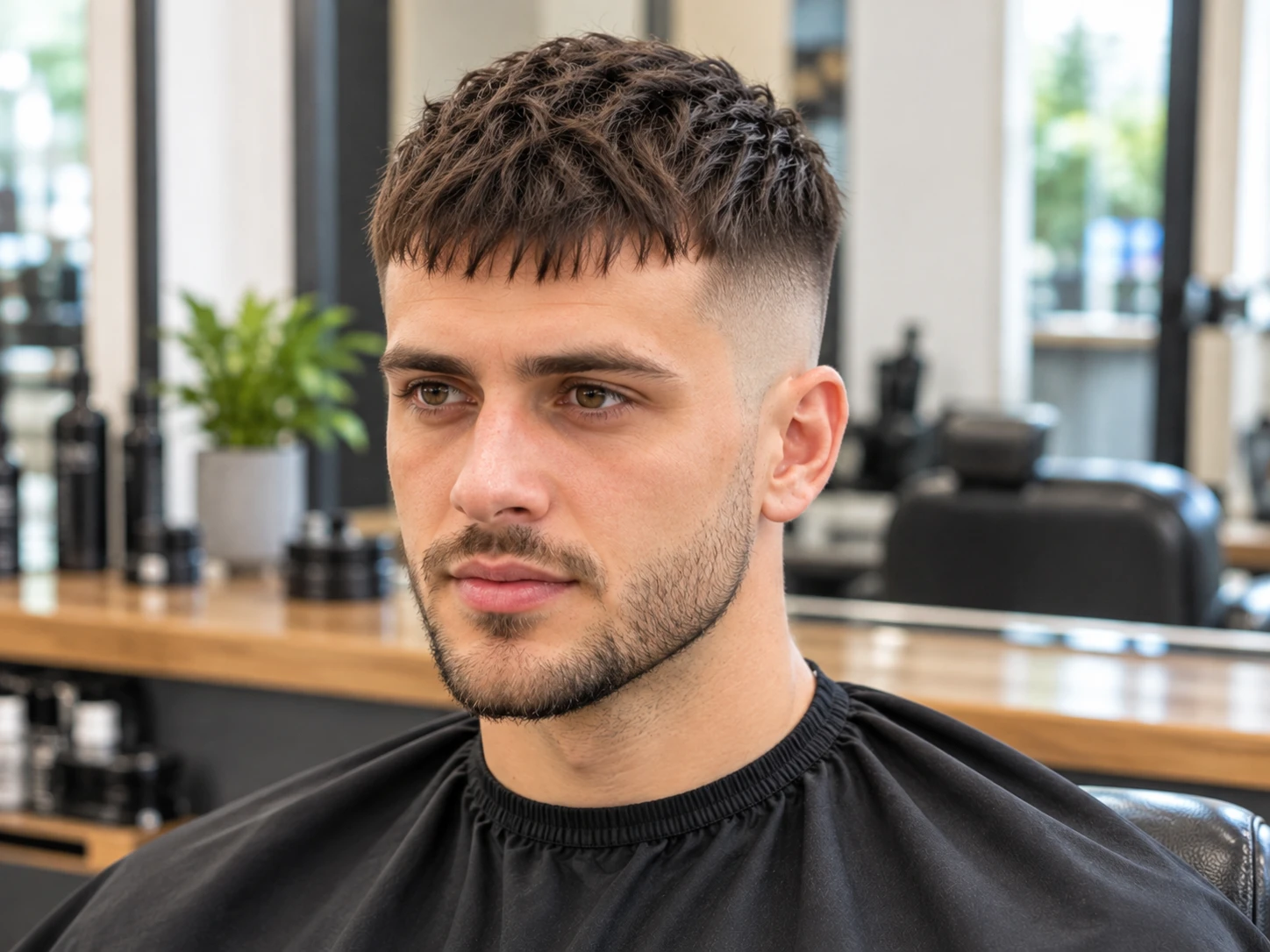
A French crop is a short haircut for men. The top is left a little longer, usually around 1.5 to 2.5 inches, and combed forward into a short fringe across the forehead. The sides and back are faded or tapered, which gives a clean contrast between the top and the sides. The fringe can be blunt and straight across, or lightly textured with a softer edge.
The cut has roots in military grooming, where short hair was practical and easy to maintain. It came back into fashion as a classic, low maintenance style that suits straight, wavy and curly hair. It looks clean and neat in a professional setting, and it looks just as good with a casual, relaxed finish. The key idea is control: the fringe direction, the surface texture and the contrast at the sides all work together to frame the face.
How the Forward Fringe Hides a Receding Hairline
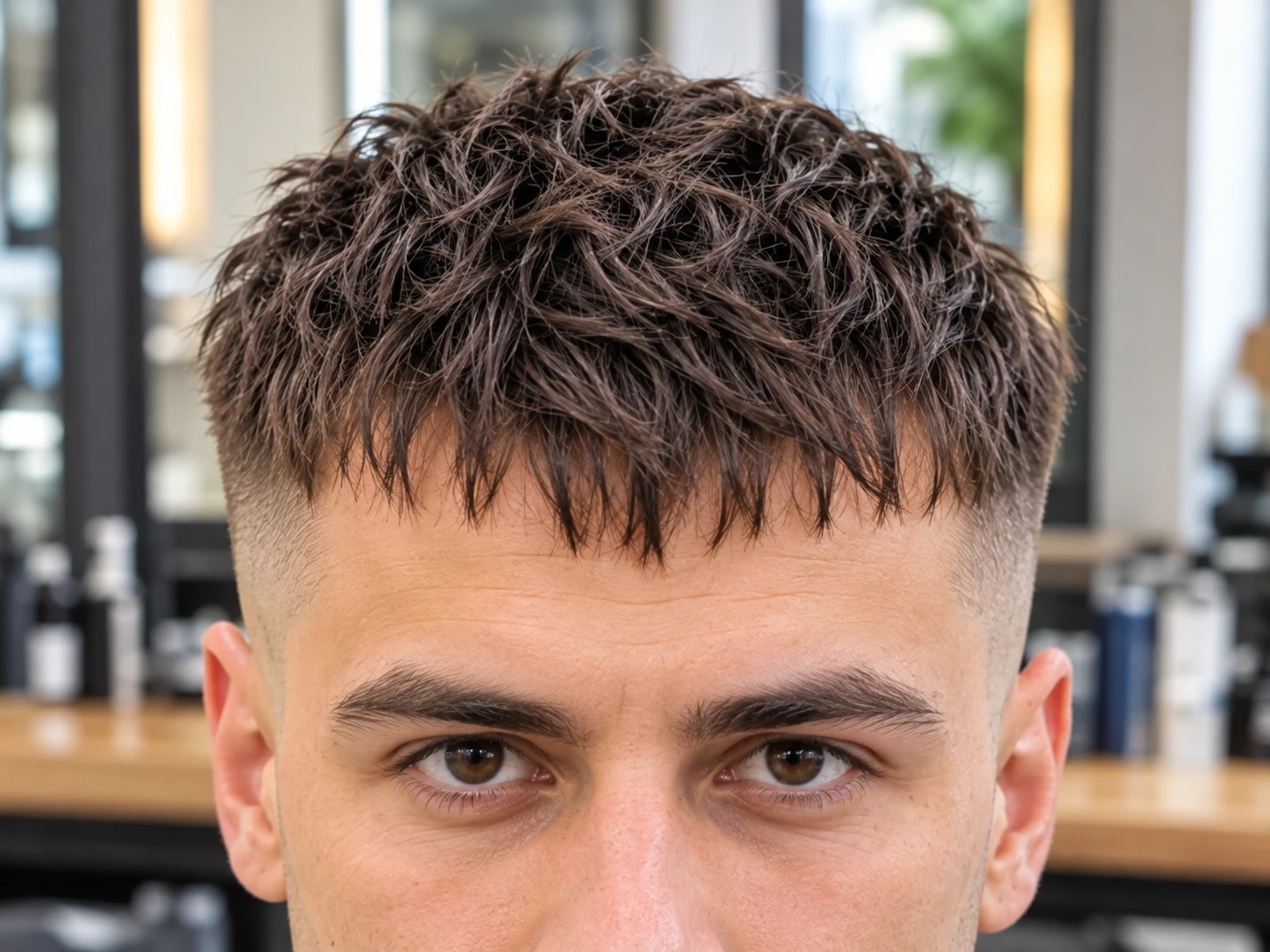
Temple recession is most visible at the front and sides of the hairline. The French crop fixes that with its defining feature, the short textured fringe. The fringe falls forward from the centre, covers the front hairline and reduces the visible gap at the temples. It creates a visual hairline that sits lower and further forward than the real one.
The short sides help too. Combined with a mid or high skin fade, the cut draws attention to the sides rather than the hairline. The eye follows the clean fade and the fringe, not the temples. That is why the style works as a smart way to deal with thinning hair without looking like a cover up.
If you want to compare this cut with other options, our guide to the best haircuts for receding hairline men shows how the French crop sits next to styles like the buzz cut and the textured crop.
Who the French Crop Suits and Who Should Skip It
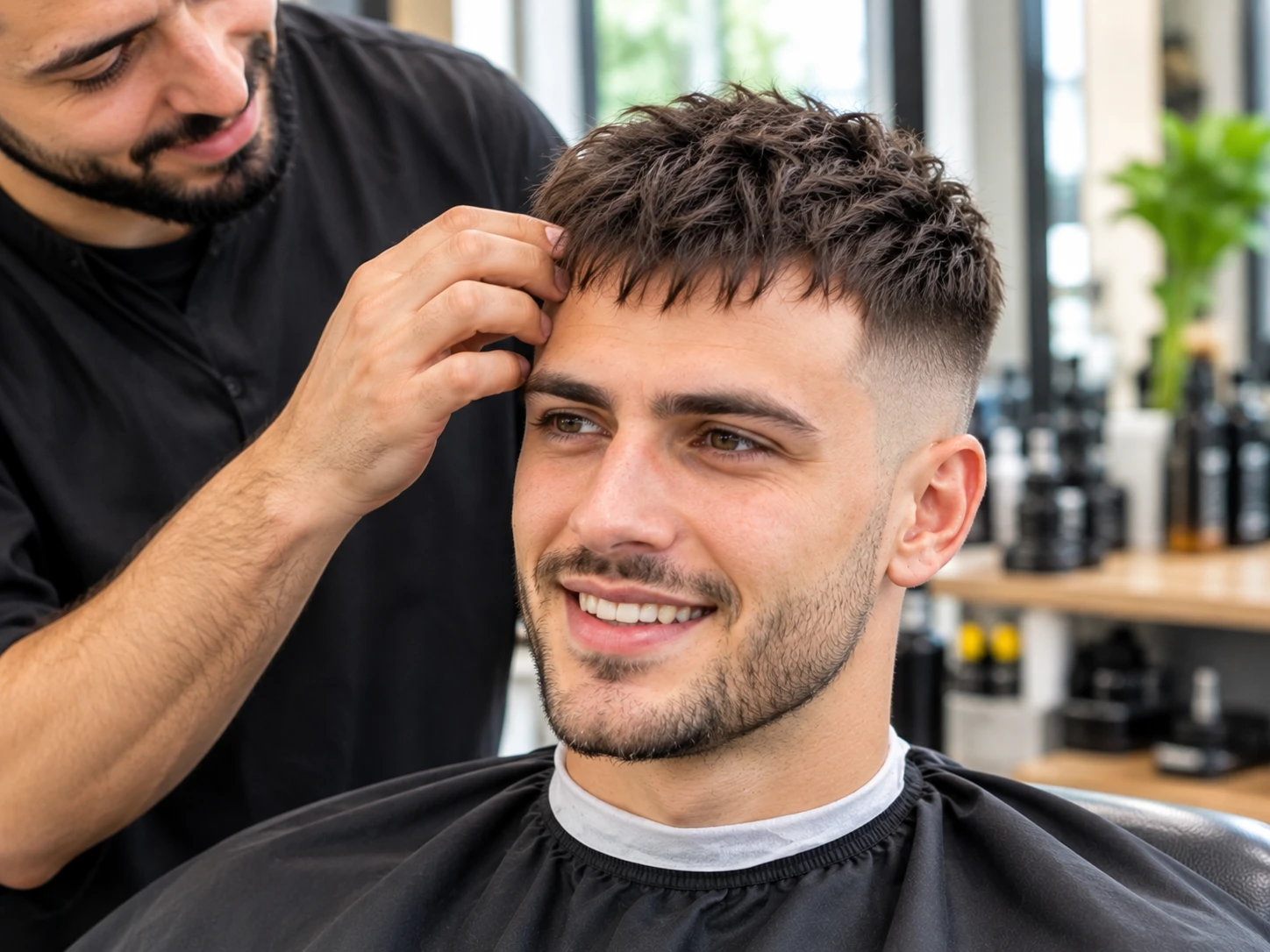
The French crop tends to suit men with thin or fine hair, a receding or high hairline, and anyone who hates styling. It suits oval, square and round faces well, because the short sides and textured top add balance without much effort. It also works for men over 40, since a low or mid fade grows out more gracefully than a skin fade and means fewer barber visits.
It works best when the recession is at the temples and no further along than about Norwood 3. Men with combined recession and a thinning crown also get a good result, because the short overall length keeps everything looking tidy and dense rather than stringy. Straight hair gives the fringe a clean, precise line, wavy hair adds movement and soft fringe lines, and curly hair can work too if the sides are faded tight and the curls define the top.
Skip it if the recession is advanced, at Norwood 4 and beyond, because there is too little hair left to make a fringe work. Skip it on a very long, narrow face too, because the horizontal fringe can add width where none is needed, and a side swept variation works better there. From my chair, I check the density at the front before I commit a client to this cut, because that is what decides whether the fringe will work.
Fringe Length: How Long to Keep It
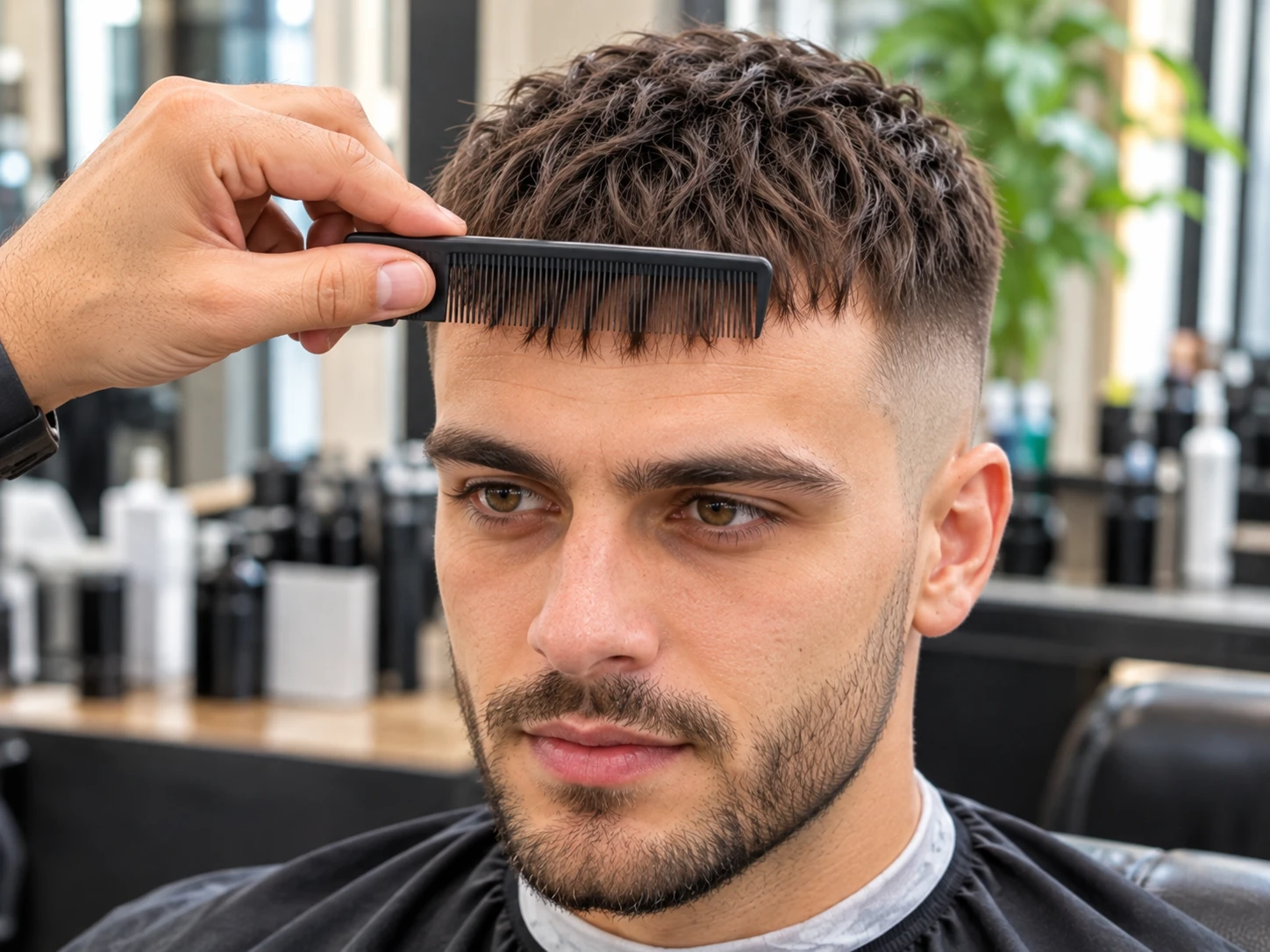
Fringe length is the detail that decides whether the cut hides the hairline or not. Keep the top between 0.75 and 1.5 inches, which is long enough to fall forward as a defined fringe. If the hairline is receding, ask the barber to keep the fringe long enough to reach the hairline, so the front edge lands where you want it.
The key is controlled length. Too long, and the fringe separates in the wrong places and starts to look messy. Too short, and it stops helping, because it no longer covers the temples. A longer fringe softens the front and adds movement, which suits a higher forehead, but it needs light paste or cream and a quick blow dry forward to keep it in place. From my chair, I cut the fringe a fraction longer than the client asks for, because hair springs up as it dries.
Fringe Texture: The Point-Cut Edge That Makes It Look Deliberate
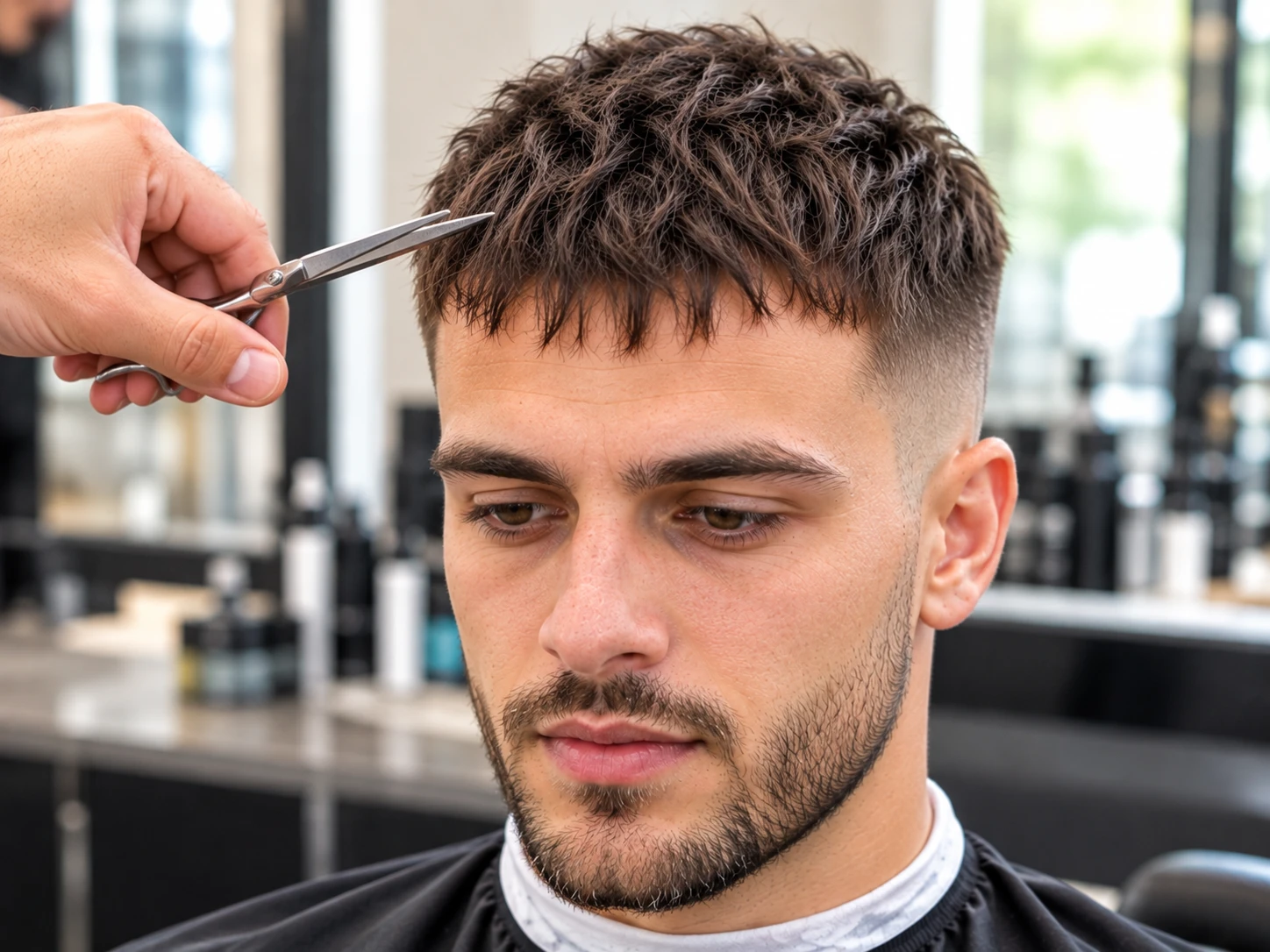
Texture is what stops a French crop from looking like a cover up. The barber should point cut the fringe, which means cutting into the ends with the tips of the scissors, so the edge looks deliberate rather than flat. A blunt fringe is cut straight across and gives a clean, graphic line across the forehead. A textured fringe is broken up with choppy layers, which adds volume and a more natural look.
The texture should follow the natural growth direction of the hair. Point cutting and light slicing stop the top from looking heavy and lifeless, and they give the fringe movement instead of a solid wall of hair. For fine hair, a broken texture with root lift works better than one blunt, heavy layer, because it creates the illusion of density.
Sides and Fades: Low, Mid, High and Skin Fade
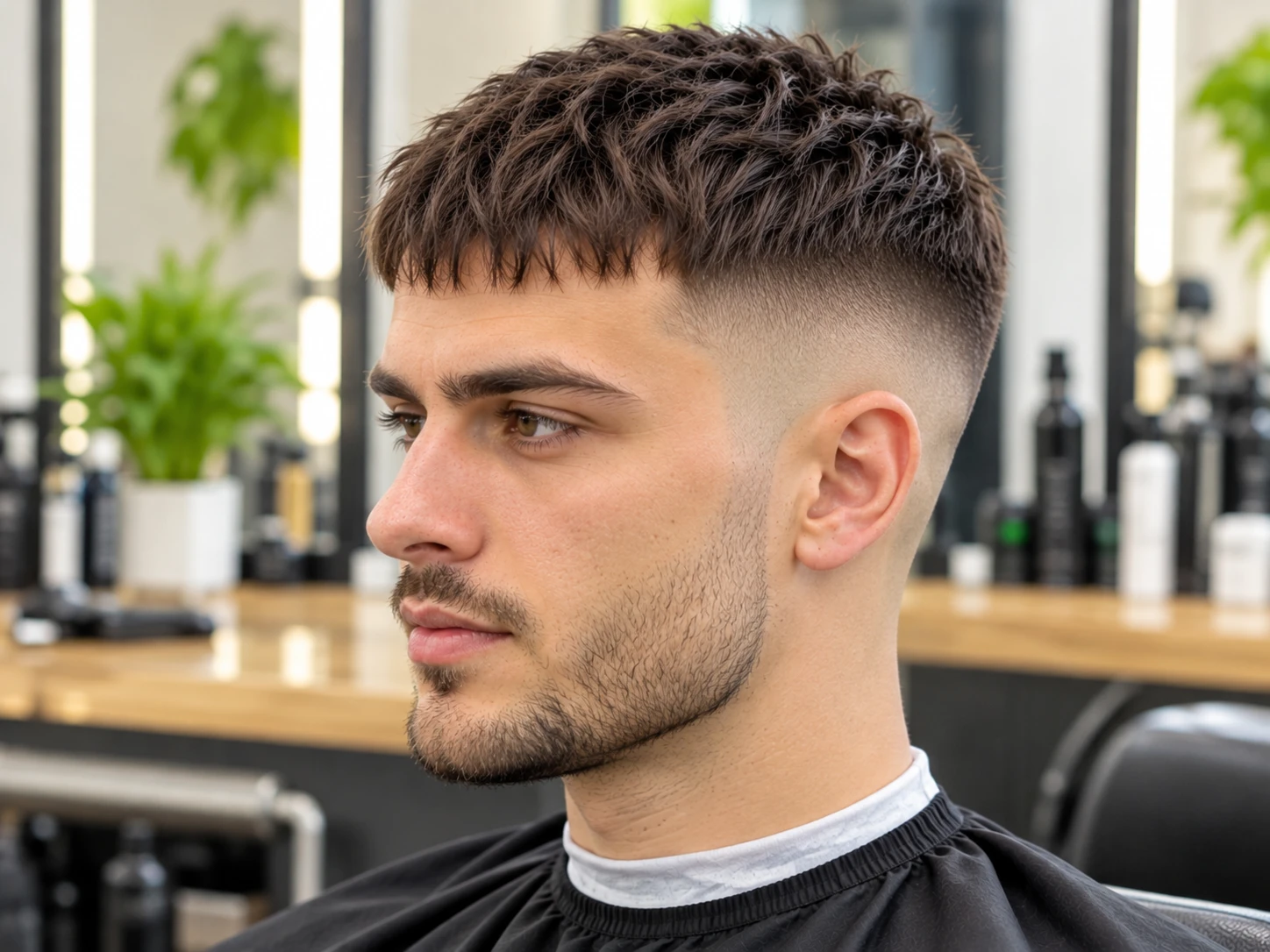
The sides decide how sharp the whole cut looks. A low fade starts about half an inch above the ears and keeps the shape compact, so it grows out with less drama. A mid fade starts halfway up the sides and is the balance point, with more contrast than a low fade and less exposure than a high fade. A high fade lifts the contrast above the temple, which makes the textured top look heavier and more sculpted. A skin fade takes the sides down to bare skin, so the top looks more dramatic and the fringe becomes the statement.
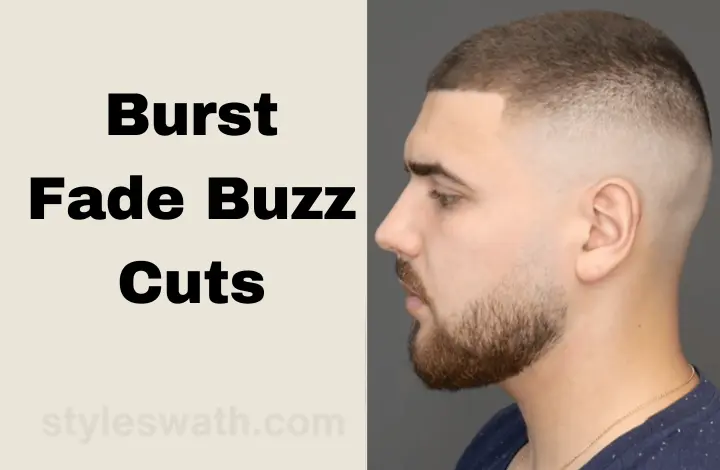
For a receding hairline, a high skin fade or zero fade works well, because the short sides become part of the fade and the temples look less obvious. A taper is a softer choice: the hair shortens gradually around the sideburns and the neckline, so the grow out is natural and less graphic. A drop fade curves behind the ear and falls lower toward the back, while a burst fade radiates around the ear for a rounder side shape. A temple fade concentrates the detail around the temples, which frames the face.
If you like strong contrast at the sides, the French crop burst fade pairs the same forward fringe with a burst fade around the ear.
French Crop vs Caesar Cut, Textured Crop and Buzz Cut

The French crop and the Caesar cut are similar but not the same. The French crop has more texture, with a longer, piecey and slightly irregular fringe. The Caesar cut has a flatter, more uniform fringe that is shorter and blunter. For a receding hairline, the French crop usually looks more modern and intentional, because the longer fringe covers the temples better. The Caesar cut is still a reasonable option when the recession is mild and you want the simplest shape.
The textured crop is the messier cousin, with a more irregular, broken up fringe and a relaxed, lived in feel. Our guide to the textured crop haircut for men explains how the choppy layers and the fade work together. The buzz cut is a different answer: very short and very even, with little room for styling, and it can accentuate the line because there is no fringe to cover it.
What to Ask Your Barber (Exact Words to Use)

Most barbers know the French crop by name, so start with it. Then be specific, because ‘short’ and ‘textured’ mean different things to different barbers. Use this script: ‘I have a receding hairline and I want a French crop. Mid skin fade on the sides. Keep the top around an inch. I want a defined horizontal fringe that falls forward. Add some texture to the fringe so it does not look too flat. Matte finish.’
Then name the three choices that matter most: the fade height, low, mid, high, taper or skin; the fringe style, blunt, textured or long; and how much length stays on top. If the hairline is receding, ask the barber to keep the fringe long enough to reach the hairline. Bring a photo reference, because a photo matters more than any description.
How to Style a French Crop in Under 3 Minutes

Start on damp hair. Towel dry until the hair is damp, not dripping, so the product spreads evenly and the style sets naturally.
Blow dry forward, aiming the dryer toward the forehead and using fingers or a vent brush to guide the hair. Use medium heat and medium speed, because that sets the direction the fringe holds all day. Then finish with a small amount of matte clay, rubbed between the palms and pushed forward with the fingers.
Maintenance, Trims and Mistakes to Avoid
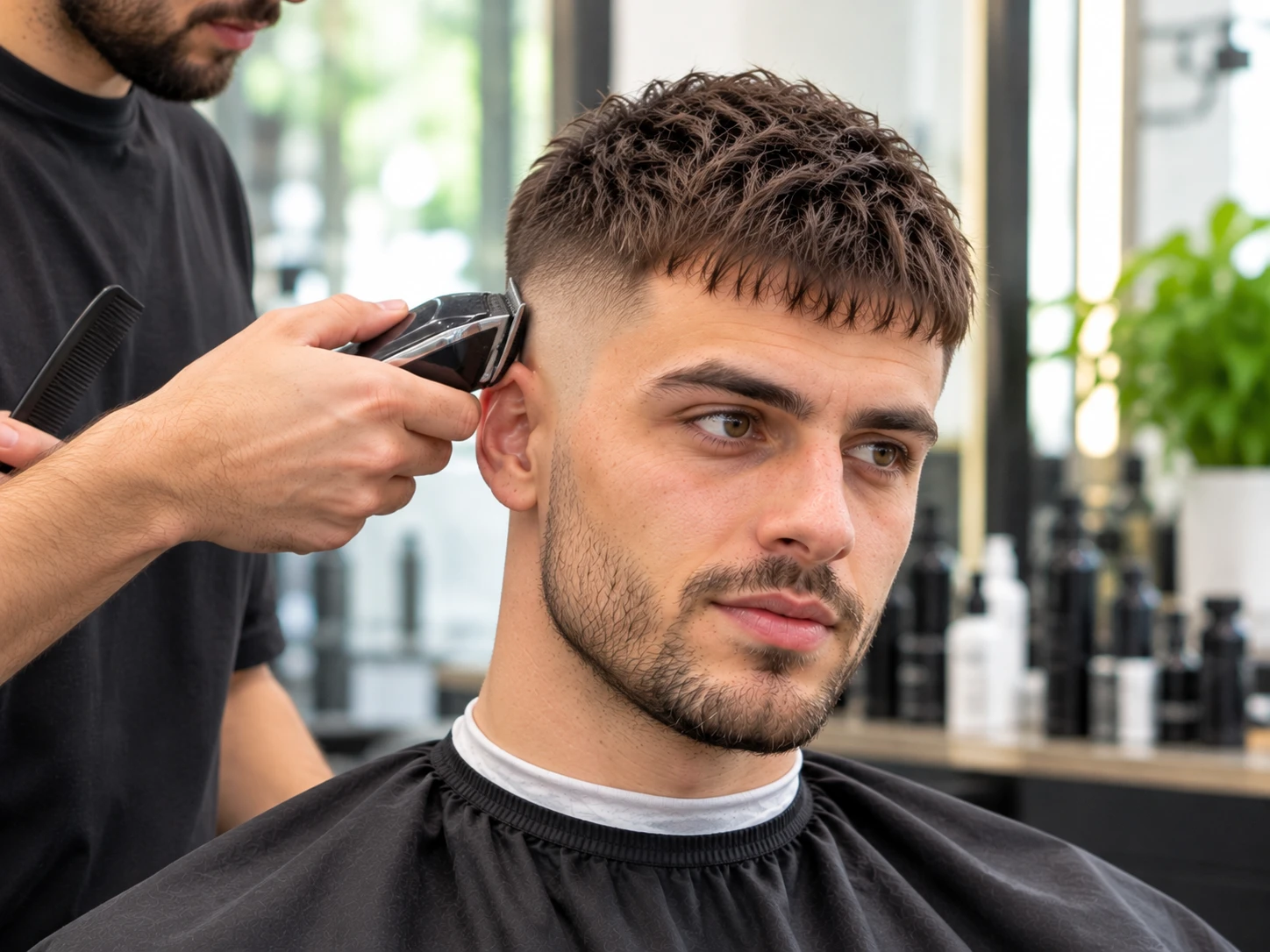
Book a barber visit every 3 to 5 weeks. The faded sides grow out faster than the top, so they set the schedule. A skin fade needs a trim every 2 to 3 weeks, a high or mid fade every 3 weeks, and a low fade or taper every 4 to 5 weeks.
Do not let the fringe get too long, or it separates in the wrong places. Do not cut it too short, or it stops covering the temples. Do not use gel, shine products or heavy wax, because they flatten the fringe and show the hairline. If you prefer the softest grow out, a low taper fade haircut for men keeps the sides fuller while the top stays short.
Frequently Asked Questions

Yes, when the recession is at the temples and no further along than about Norwood 3. The fringe covers the front hairline, and the short sides draw the eye away from the temples.
Keep the top between 0.75 and 1.5 inches, long enough to fall forward and reach the hairline. Too long and it separates.
A mid skin fade is the best balance for most men. A high skin fade makes the temples look less obvious, while a low fade or taper is the softer choice.
A French crop has a longer, more textured fringe, while a Caesar cut has a shorter, flatter and more uniform fringe. For a receding hairline, the French crop usually works better.
Book a trim every 3 to 5 weeks. A skin fade needs one every 2 to 3 weeks, a high or mid fade every 3 weeks.



- Be Respectful
- Stay Relevant
- Stay Positive
- True Feedback
- Encourage Discussion
- Avoid Spamming
- No Fake News
- Don't Copy-Paste
- No Personal Attacks
- Be Respectful
- Stay Relevant
- Stay Positive
- True Feedback
- Encourage Discussion
- Avoid Spamming
- No Fake News
- Don't Copy-Paste
- No Personal Attacks
