Best Haircuts for Receding Hairline Men: Styles That Work
Published: 7 Nov 2026
You notice it in a photo first. The front looks a little higher than it used to, the corners at your temples have moved back, and a haircut that once looked easy now seems to show every gap. You are not imagining it, and you are not alone. A receding hairline is common, it can start in your twenties or thirties, and it can change how you feel about your hair even when the rest of it still looks full.
This guide to the best haircuts for receding hairline men walks you through the cuts that actually help, from short clean styles to forward fringes, fades, and textured tops. You will learn what makes a cut work for a receding hairline, which styles to avoid, how to style thin areas so they look fuller, and what to ask your barber at your next visit. No cut in this guide tries to hide your hairline with a trick. Each one works with the hair you have and gives it a clean, deliberate shape.
What Is a Receding Hairline and Why It Happens
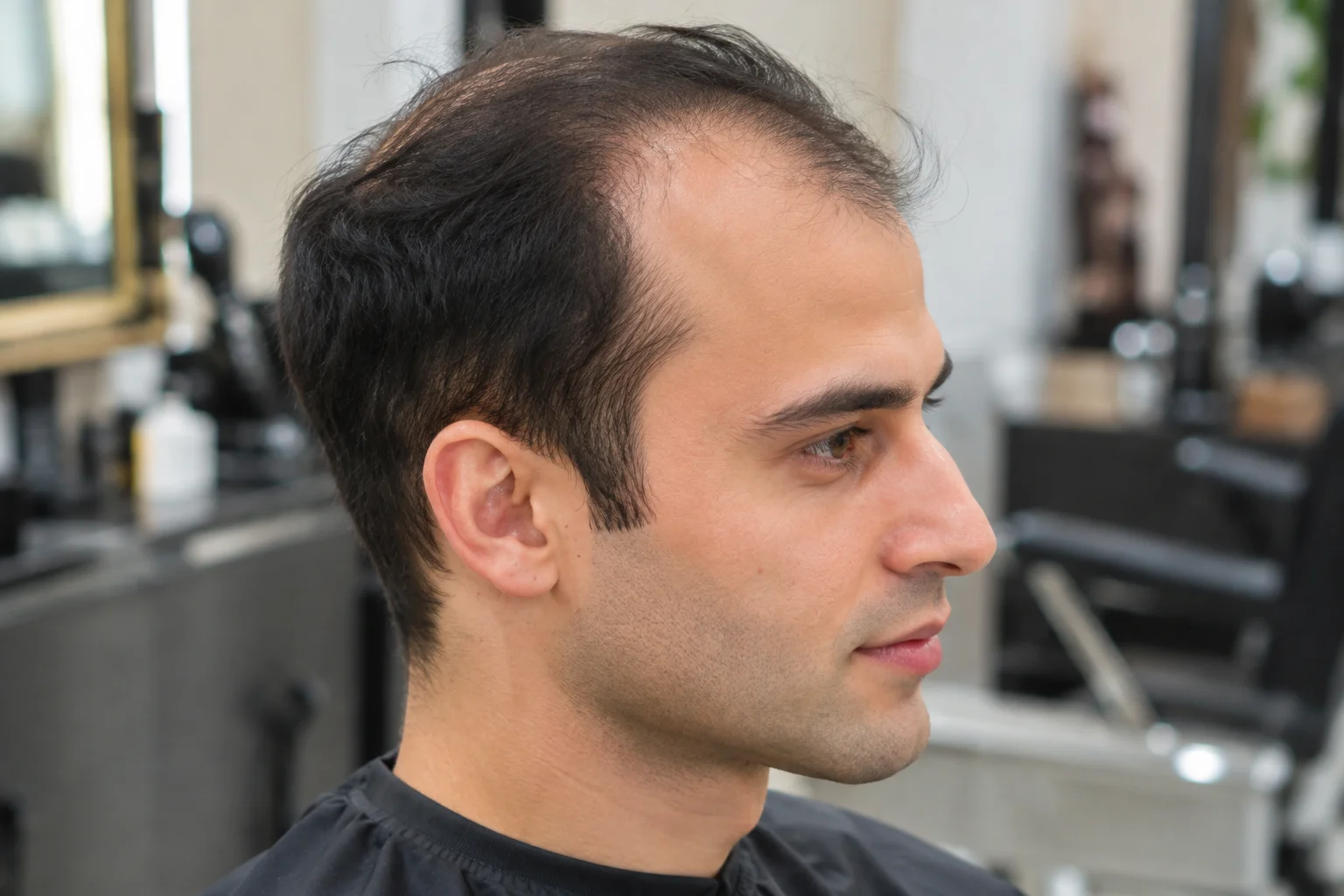
A receding hairline means the front edge of your hair moves back over time, usually first at the temples. The corners deepen, the forehead looks taller, and the front can take on an M shape or a V shape. It is different from a mature hairline, which sits a little higher and then stays put. A receding line keeps moving, slowly, and the hair at the temples often gets finer first.
I first saw it on myself in a barbershop mirror under bright light. My barber did not make a fuss. He just said the corners were going back and the top still had plenty of strength. That small, honest note changed how I chose cuts. I stopped asking for styles that needed a low, straight front, and I started choosing shapes that worked with the line I had. That is the shift this guide is built on.
The most common cause is genetics and male pattern hair loss. A hormone called DHT can weaken the follicles at the front and crown over time, so the hair there grows finer and shorter. Age adds to it, and so can stress, poor sleep, a weak diet, sudden weight loss, and tight styles that pull at the front. A good cut cannot change those causes, but it can change how much they show, and that is where the rest of this guide comes in.
Why the Right Haircut Matters for a Receding Hairline
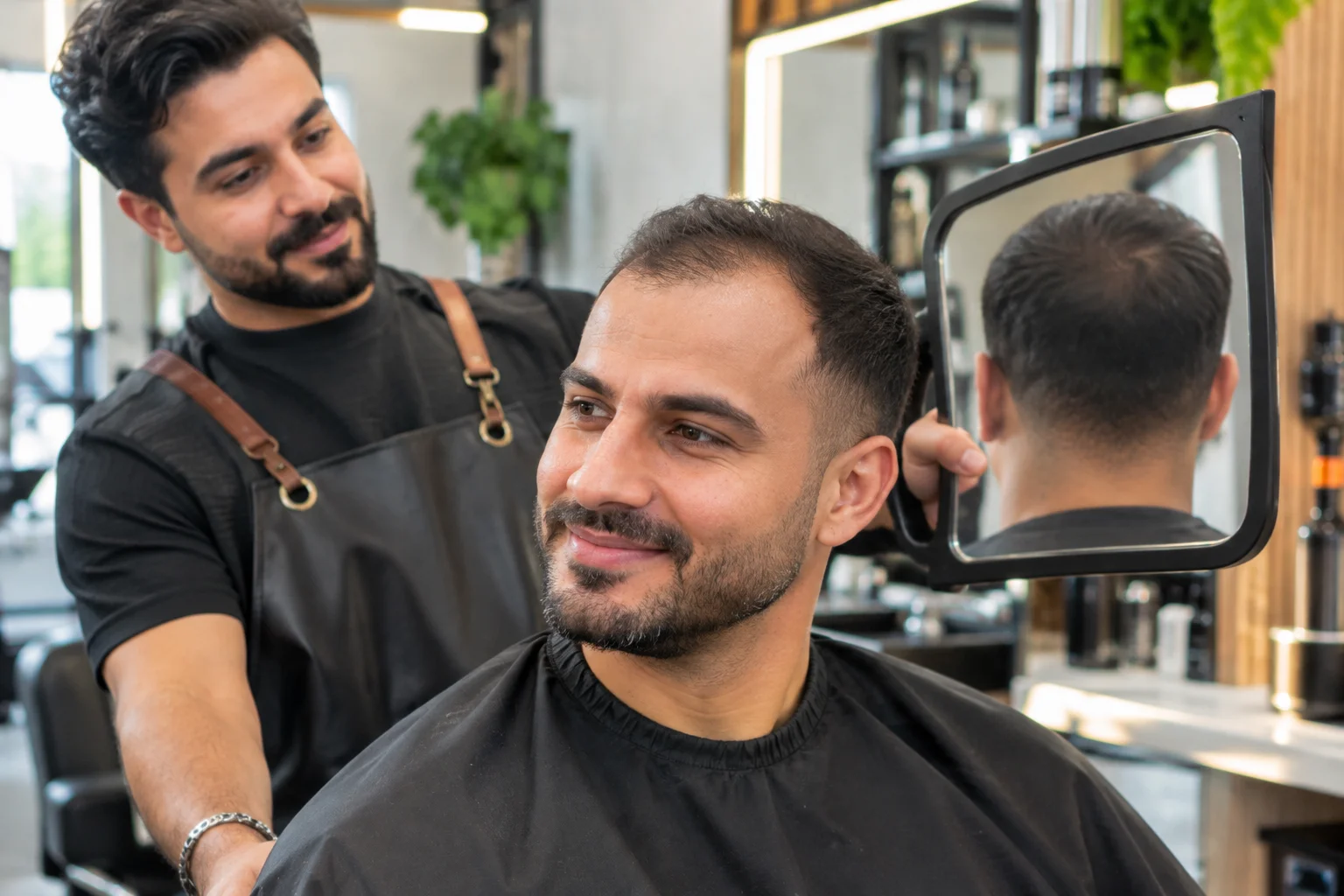
A good cut does three things. It makes the sides and top sit in balance, so the temples do not look like the thinnest part of the cut. It adds texture and volume where the hair is still strong, so the eye goes to shape and movement instead of to a bare corner. And it gives the front a clear edge, so the hairline looks like part of the style, not like a mistake you are trying to cover.
I have learned this the hard way. A long, flat style made my corners look deeper, even though my hair was the same length as before. A short, textured cut with a clean taper did the opposite. It took ten minutes to style, it held its shape in wind, and nobody looked at my hairline first. That is what a good cut does. It does not bring hair back. It changes the balance, and the balance changes the whole look.
Short and Clean Haircuts That Work Best
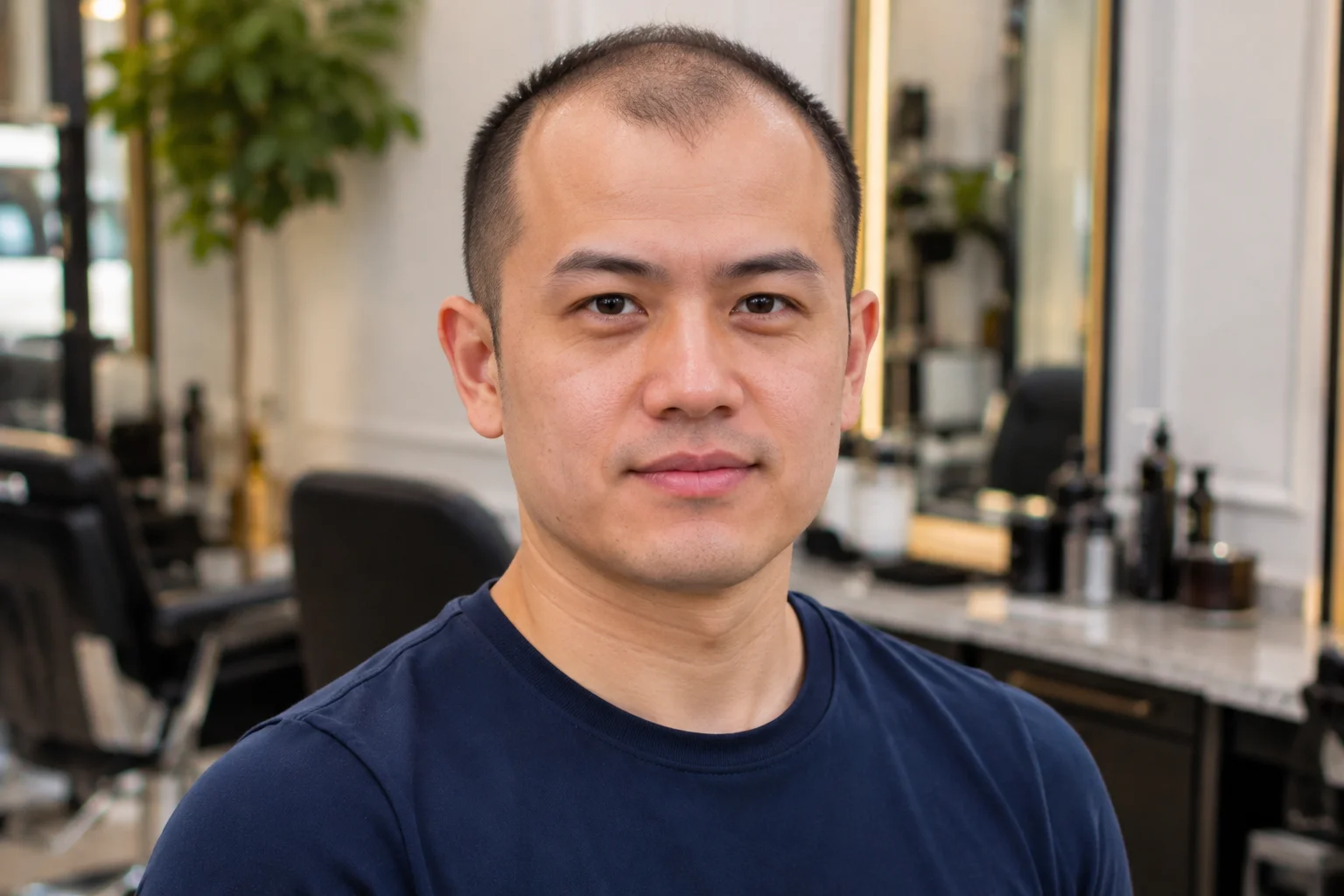
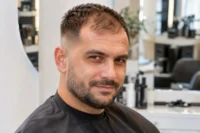
Short cuts are the safest place to start, and for many men they are the best answer of all. Short hair cuts down the contrast between thick and thin areas, so the temples blend instead of standing out. It is also easy to keep neat, it dries fast, and it looks deliberate instead of thin.
The buzz cut is the simplest choice. One even length all over, often a number 2 or 3 guard, takes away the line between thick hair and thin hair. It suits a strong jawline, it draws the eye to your eyes and cheekbones, and it works well with a short beard. If you are nervous about going short, ask your barber to start a little longer and take it down in steps.
The crew cut keeps a little more length on top with neat, tapered sides, so it looks smart for work and still hides the corners. The Ivy League is its longer cousin, with enough top to push to the side. The high and tight is shorter and sharper, with a skin fade at the sides. And when the recession is far along, a clean shave is an honest, confident finish. Try a very short buzz first, then decide if a full shave feels right for you.
I wear a short textured crew most weeks, and it is the cut I reach for when I want to look tidy without thinking about my hair. My barber keeps the sides tight, leaves just enough top to push forward, and the corners stop being the first thing I see in the mirror.
Forward Fringe and Crop Haircuts
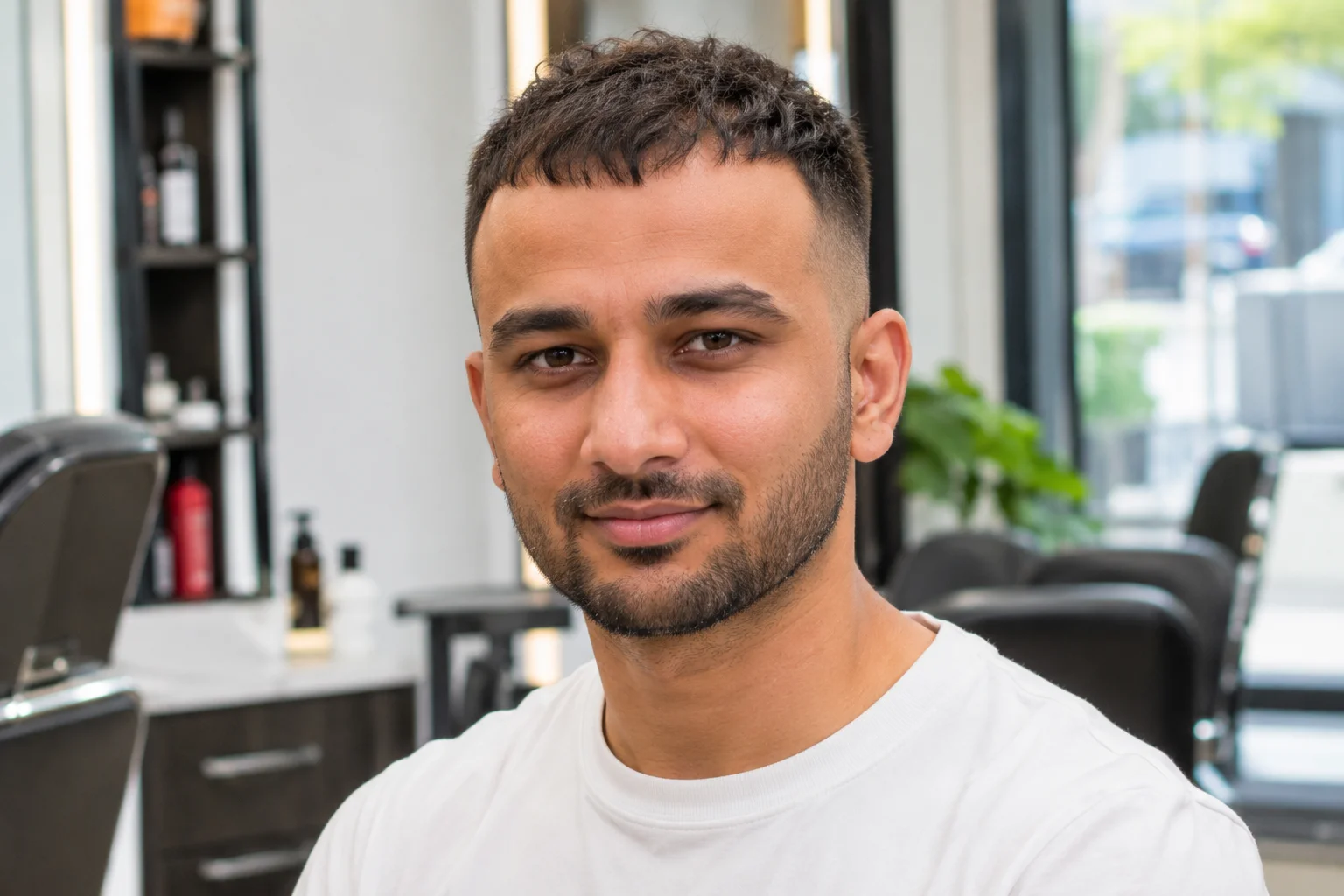
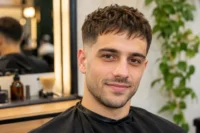
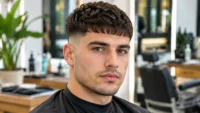
If you want coverage at the front without a comb-over, a forward fringe is the honest way to do it. The hair is cut to fall forward, so it softens the corners and lowers the visible hairline by a small, natural amount. The key is texture. A blunt, heavy fringe can look like a wall, while a choppy, textured fringe looks like a style.
The French crop is the best known version. The top is short, the fringe is cut straight or slightly choppy, and the sides are faded or tapered. The Caesar is close to it, with a short, even fringe pushed forward. Both work well for straight and slightly wavy hair, and both need a trim every 4 to 6 weeks to keep the fringe at the right length.
The textured crop adds choppy layers on top and a matte finish, so the hair looks thicker than it is. Ask your barber for point cutting, which is a way of cutting into the ends so they do not sit in one flat line. A little matte clay or texture powder gives it lift without shine, and shine is what makes thin spots show.
I asked for a textured crop before a family wedding, and it was the first time I stopped checking my hairline in every photo. The fringe sat forward, the top had movement, and the sides were clean. My advice is simple: take a photo to your barber, and tell him how much forehead you want to show. A photo beats a long description every time.
Haircuts With Height and Texture
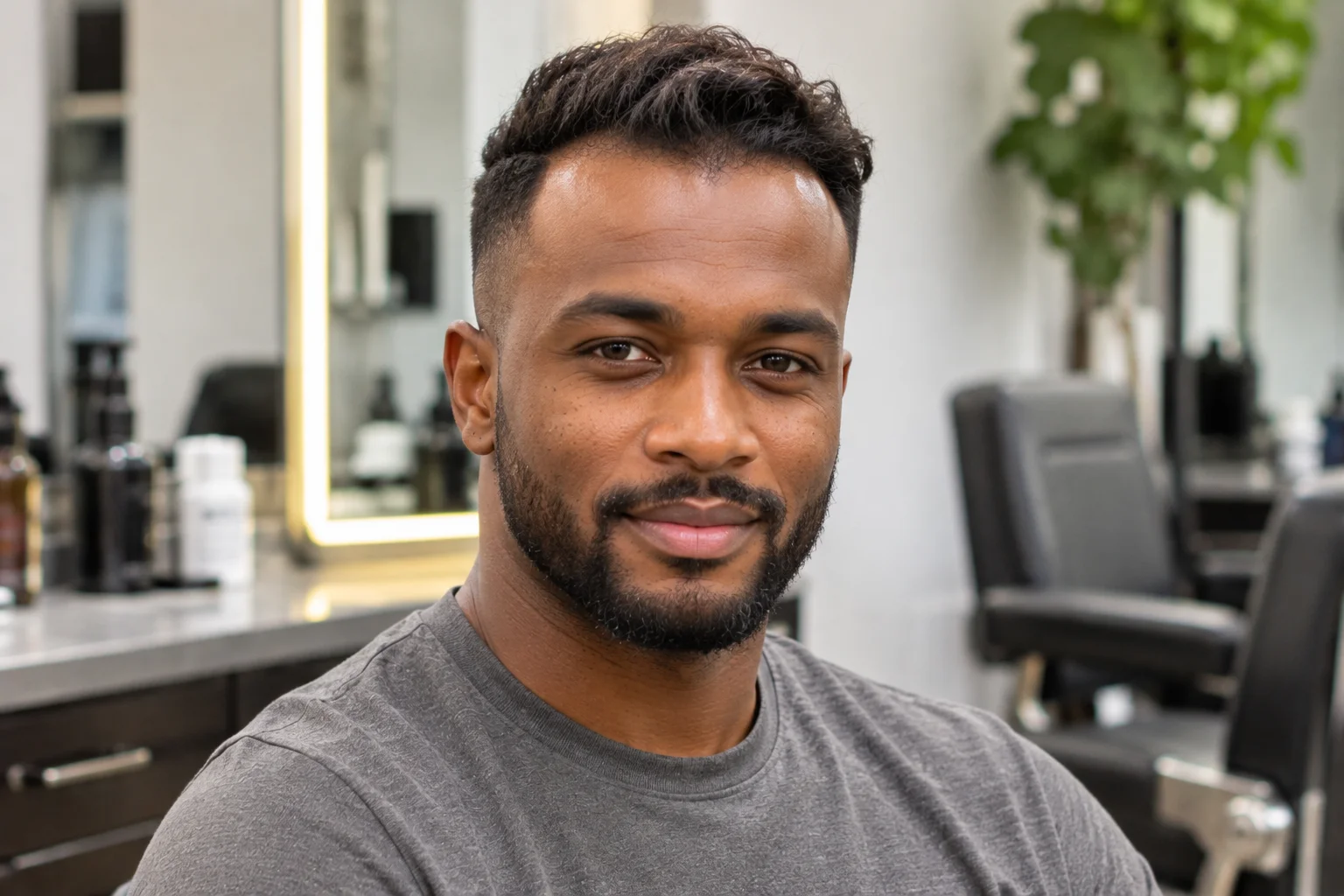
Height and texture pull the eye up and away from the corners. A quiff lifts the front up and back with a blow dryer and a little matte paste. A short pompadour is similar, with more height and cleaner sides. A faux hawk is a strip of textured hair down the centre, with faded sides, and it works well when the temples are thin because it keeps the focus in the middle. Spiky, messy texture works the same way, with short, choppy pieces that break up the line of the hairline.
If your hair is wavy or curly, use it. Curls and waves add natural volume and hide thin spots better than straight hair does. Keep the top a little longer, let the curls sit forward or to the side, and keep the sides short so the shape stays clean. I tried a quiff for a summer, and the extra five minutes in the morning paid off. Keep the product light, because heavy wax pulls the front down and shows more scalp, not less.
Side Parts, Slicked Back Styles and Longer Hair
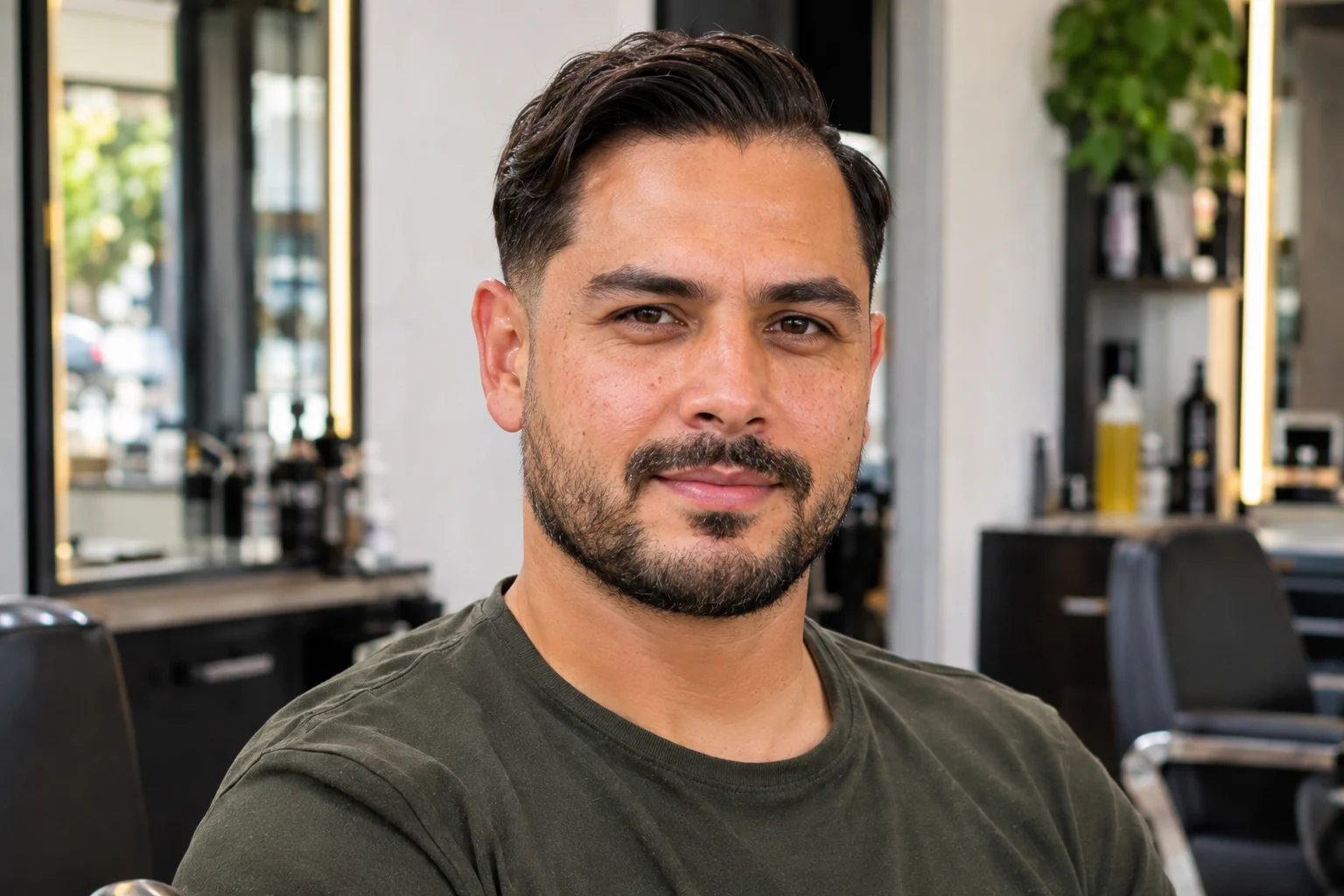
Not every receding hairline needs a short cut. A soft side part can look timeless and smart, as long as the part sits on the fuller side and the hair is not combed flat. Keep it loose, add a little texture, and let the sides taper in. A hard, shiny part can make thin areas look thinner, so keep the finish matte.
The slicked back look can work when the top is still thick, but it is risky when the temples are deep. Combing straight back pulls the eye to the corners and shows the scalp. If you like the look, keep it soft, use matte paste, and comb the hair slightly up instead of flat back. A widow’s peak, that small point in the centre of the front, can actually help here, because you can sweep the hair to one side of the point and make it look deliberate. Longer, layered hair with movement can work too, but only when the hair is still thick. A curtain style with a centre split can balance both sides, while a middle part on thin, flat hair splits the front and shows the scalp. If the front gets thin and stringy, cut it shorter.
Fades and Tapers That Blend the Temples
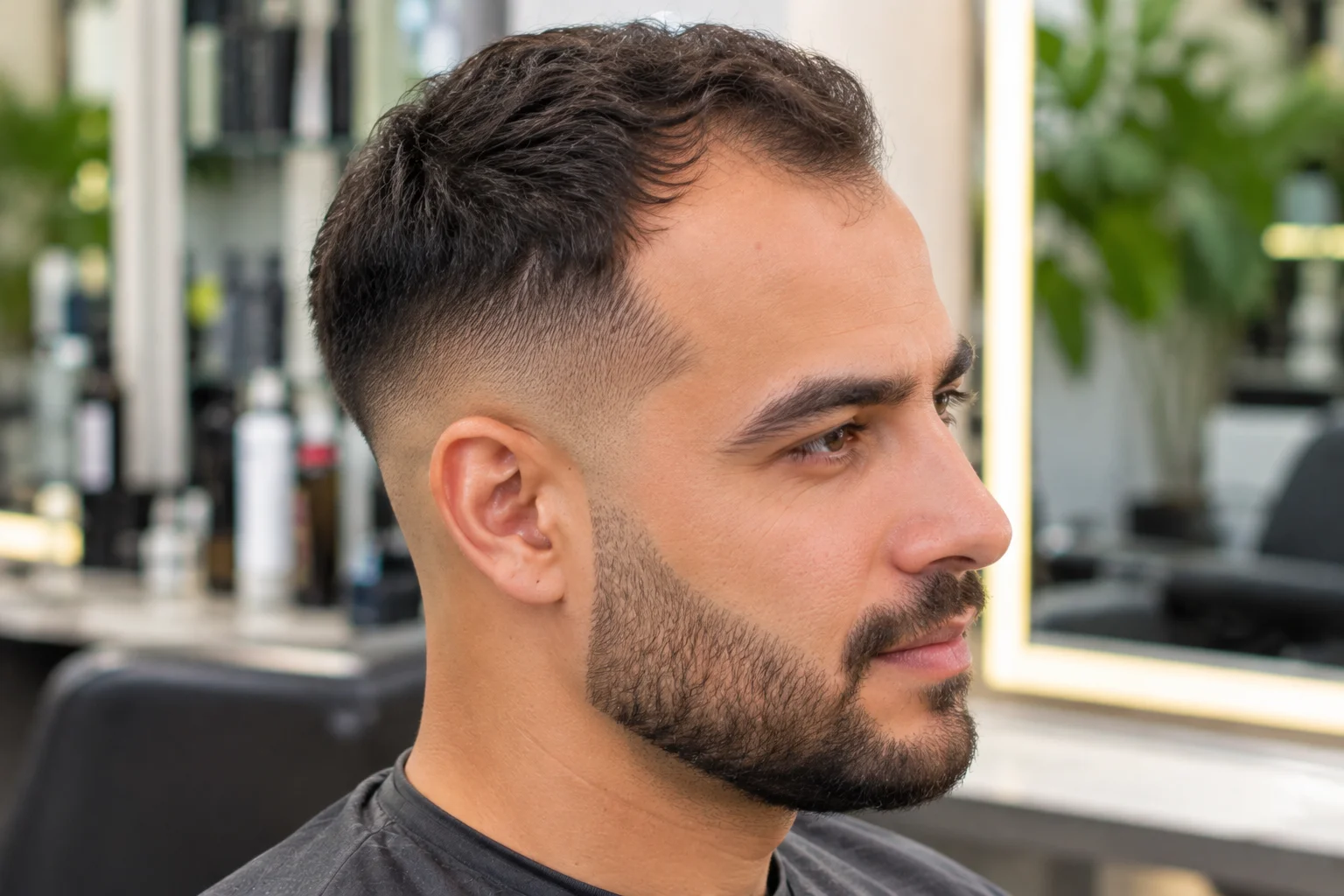
A fade is one of the best tools for a receding hairline, because it takes the bulk out of the sides and makes the temples blend into the top. A high fade starts high on the sides and gives a sharp, modern shape. A mid fade is the safe middle, clean without being too bold. A low taper is the quietest option, with just enough blend at the edges to look neat for work.
The skin fade, also called a bald fade, goes down to the skin at the bottom and is great when the hair at the temples is very thin, because it removes the contrast completely. Ask for a lineup, a clean, straight edge at the front, only if your hairline is still even enough to hold it. Beard balance matters as much as the fade. A short, tidy beard adds weight to the lower face and pulls the eye down, away from the hairline. I ask my barber for a low taper with a textured top every few weeks, and the fade is the part that makes the whole cut look fresh even as the top grows out.
Haircuts to Avoid With a Receding Hairline

The cuts to avoid are the ones that try to cover the hairline with a trick. The comb-over is the clearest example. Long hair pulled across a thin front moves in wind, separates in light, and tells everyone what it is hiding. Long, slicked back hair, a deep middle part, and a long thin fringe do the same thing in different ways. Flat, shiny gel makes it worse, because it clumps the hair together and shows the scalp between the strands.
Tight styles are a different problem. A tight man bun, a tight ponytail, or braids that pull at the front can stress the follicles and make the front thinner over time. If you wear your hair back, keep it loose, and give the front a break most days. Here is the honest part. When the recession is far along and the front is mostly gone, no haircut will bring the line back. That is not a failure, and it does not mean you have run out of good looks. A short buzz or a clean shave often looks better than a long cut that is trying to cover too much. Some men also talk to a doctor about options such as minoxidil, finasteride, scalp treatments, or a hair transplant, and those are decisions to make with a clinician, not with a barber.
How to Style It and What to Ask Your Barber
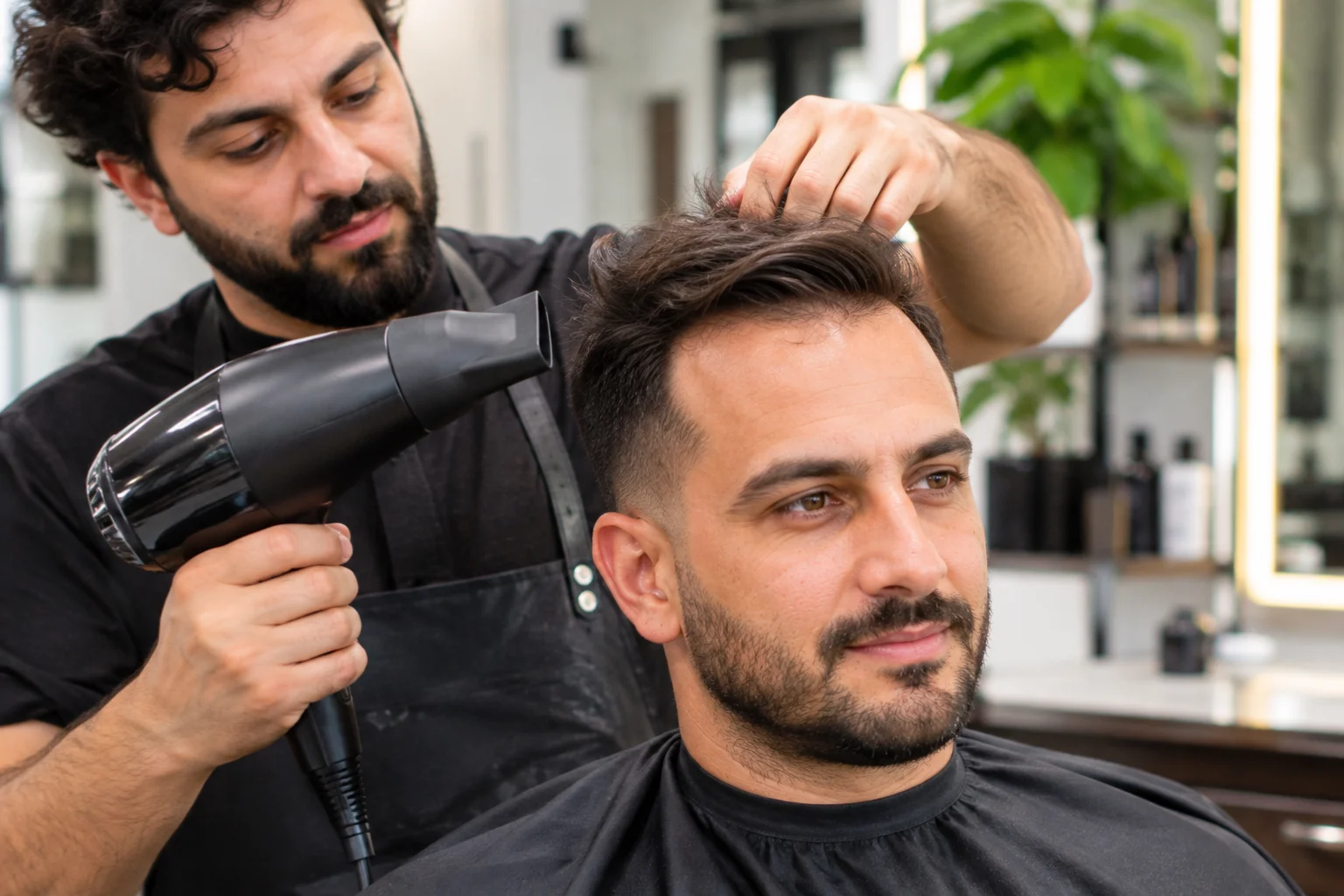
Styling is half the cut. Start with clean, towel dried hair, and use a light product. Matte clay, texture paste, sea salt spray, or a little mousse all add lift without shine. Blow dry the front up and forward with your fingers, and lift at the roots. Skip heavy wax, oil, and shiny pomade, which weigh the hair down and show the scalp. Use less product than you think you need, and add more only if the style falls flat.
Choose by hair type and face shape, not by a photo alone. Fine, straight hair looks best short and textured. Thick, wavy, and curly hair can carry more length on top. A round face suits tighter sides and a little height. A square face can carry most short cuts. A long face should avoid too much height on top. An oval face can try almost anything, so let the density of your hair decide.
At the barber, say it plainly. Try this: My hairline is going back at the temples. I want a short, textured top with a taper, and a fringe that sits forward. Show a photo of a man with a similar hair type and a similar hairline, not a model with a full, low front. Ask how often to come back, and book a trim every 4 to 6 weeks. Pick one cut from this guide, take a photo to your barber, and give it two weeks. A good cut should make you stop thinking about your hairline, and start thinking about the rest of your day.
Frequently Asked Questions

A short, textured cut is the best place to start for most men. A buzz cut, crew cut, French crop, or textured crop with a taper or fade all reduce contrast, add shape, and make the temples look like part of the style. The best one for you depends on your hair type, face shape, and how far the hairline has moved back.
Yes, in most cases. Short hair blends thick and thin areas, it is easier to style, and it does not separate or blow apart in wind. Long, thin hair at the front shows the scalp more, while a short cut keeps the shape clean and even.
A haircut can soften a receding hairline and make it less noticeable, but it cannot stop hair loss or bring hair back. A forward fringe, texture, and a clean fade all help, and a short beard can balance the face. If the hair keeps receding, the cut will need to get shorter over time.
Usually not. Long hair pulls down, goes flat, and shows the thin areas at the front. It can work if the hair is still thick, with layers and movement, but a long comb-over or a long fringe that covers the temples rarely looks natural. Shorter, textured hair is the safer choice.
Ask for a textured top with a short fringe, tapered or faded sides, and a matte finish. Tell your barber where the hairline has moved back, show a photo of a similar hair type, and ask for a trim every 4 to 6 weeks to keep the shape clean.



- Be Respectful
- Stay Relevant
- Stay Positive
- True Feedback
- Encourage Discussion
- Avoid Spamming
- No Fake News
- Don't Copy-Paste
- No Personal Attacks
- Be Respectful
- Stay Relevant
- Stay Positive
- True Feedback
- Encourage Discussion
- Avoid Spamming
- No Fake News
- Don't Copy-Paste
- No Personal Attacks
