Best Haircuts for Thinning Hair Men: Styles That Add Fullness
Published: 7 Nov 2026
You notice it in the bathroom mirror first. The light hits your hairline a little differently, or the crown looks thinner in a photo someone took from behind. Nobody else may have said a word, but you see it every morning, and it changes how you feel about your hair. If that sounds familiar, you are not alone. Most men deal with some thinning by their forties, and many start much earlier.
Here is the good news. You do not need more hair to look like you have more hair. The right cut changes how light, shadow, and texture work on your head, and it can make thin areas look fuller in minutes. The wrong cut does the opposite, and it can make even mild thinning look worse. This guide walks you through the best haircuts for thinning hair men actually ask their barbers for, plus how to style each one so it holds up all day.
Why Hair Thins and Why the Right Cut Matters
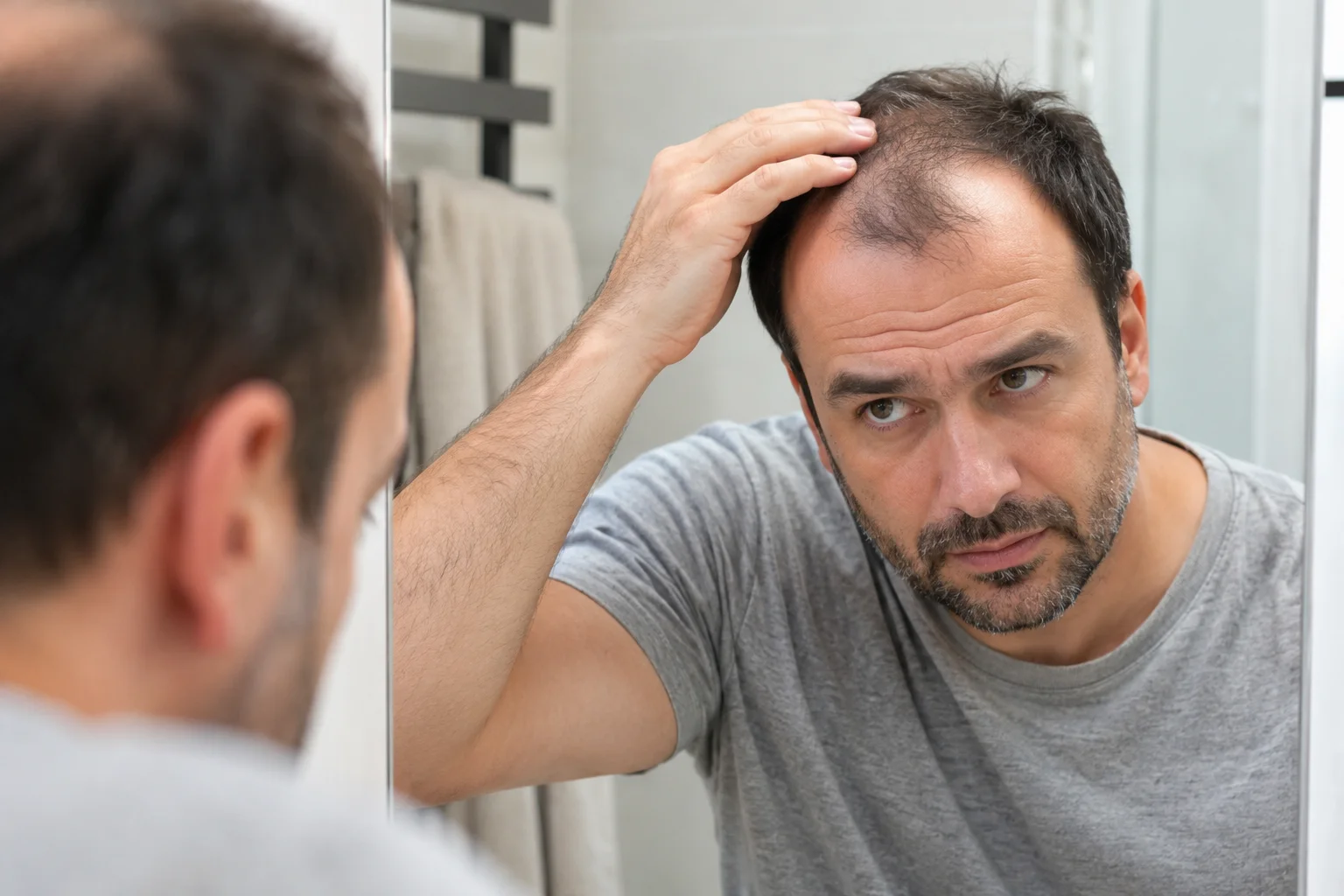
Hair usually thins for a few simple reasons. Genetics set the pattern, age slows growth, and stress or poor sleep can speed up shedding for a while. The hair itself also gets finer over time, so each strand covers less scalp than it used to. None of that means you did something wrong, and it does not mean you have to accept a style that makes you feel older than you are.
I have sat in the barber chair and watched a good barber turn a thin crown into a non-issue just by changing the direction of the cut. I have also seen the opposite, when a long comb-over made a small thin patch the first thing anyone noticed. The lesson stayed with me. A cut that works with thinning hair follows three rules. Keep the sides neat so the top looks thicker by contrast, add texture on top so strands overlap and cover more scalp, and never grow the top so long that it goes flat and separates.
The Short Buzz Cut
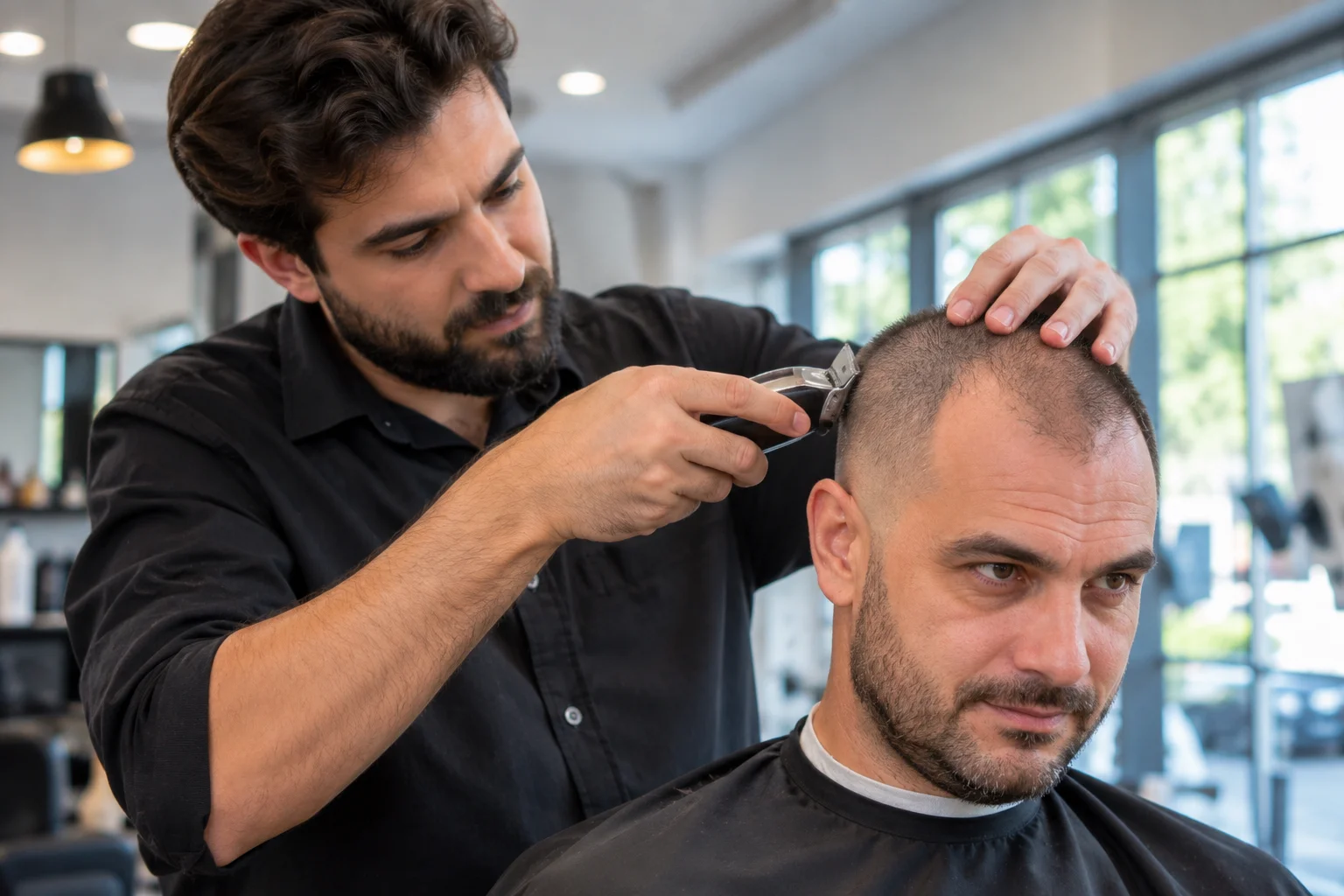
The buzz cut is the most honest answer to thinning hair, and it is often the best one. When all the hair sits at one short length, there is no long hair to contrast with a thin patch, so the eye stops hunting for weak spots. A number 2 or number 3 guard on top with slightly shorter sides keeps it neat without going full military.
I was nervous the first time I tried a buzz cut because I thought it would show everything. It did the opposite. My hair looked even for the first time in years, and my mornings got five minutes shorter. Ask your barber for a uniform buzz with a light taper at the neckline, and keep it sharp with a trim every two to three weeks.
The Textured Crop Fade
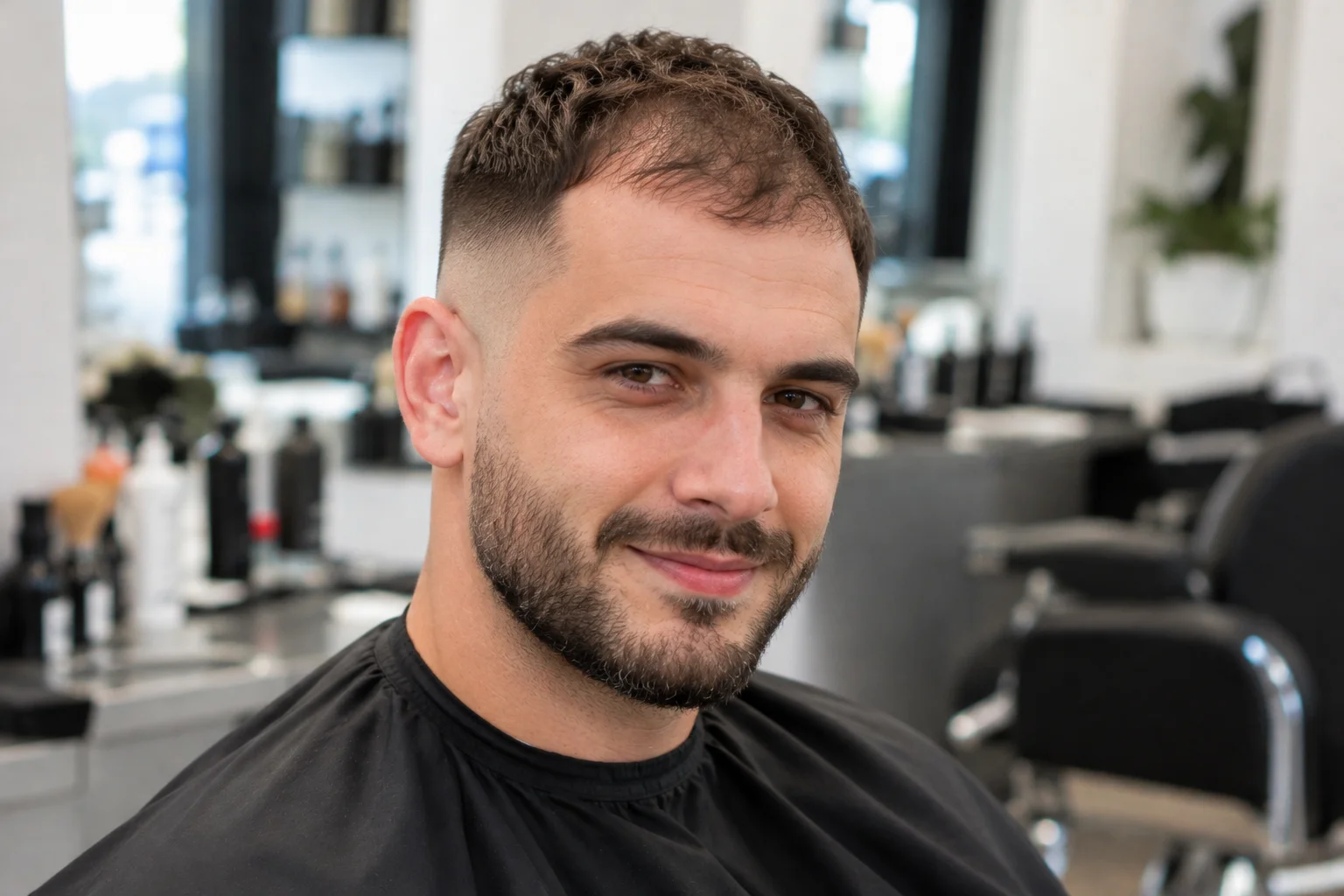
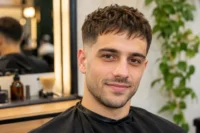
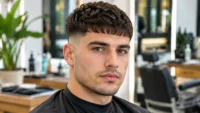
The textured crop is the cut I recommend most often to men with thinning hair on top. The hair stays short on top, usually one to two inches, and the barber cuts it in short, choppy layers that point in different directions. Those layers overlap and create shadow, which reads as thickness, while the faded sides pull the eye away from the top. Our guide to the textured crop haircut for men covers the full range of variations if you want to compare lengths before your appointment.
I wore this cut for most of last year, and what I liked was that it looked good even on days I did nothing to it. A pea-sized amount of matte clay, a quick rub between my palms, and a rough push forward was enough. This cut works best if you still have decent coverage on top and a hairline that is only slightly receded.
The Caesar Cut for a Receding Hairline
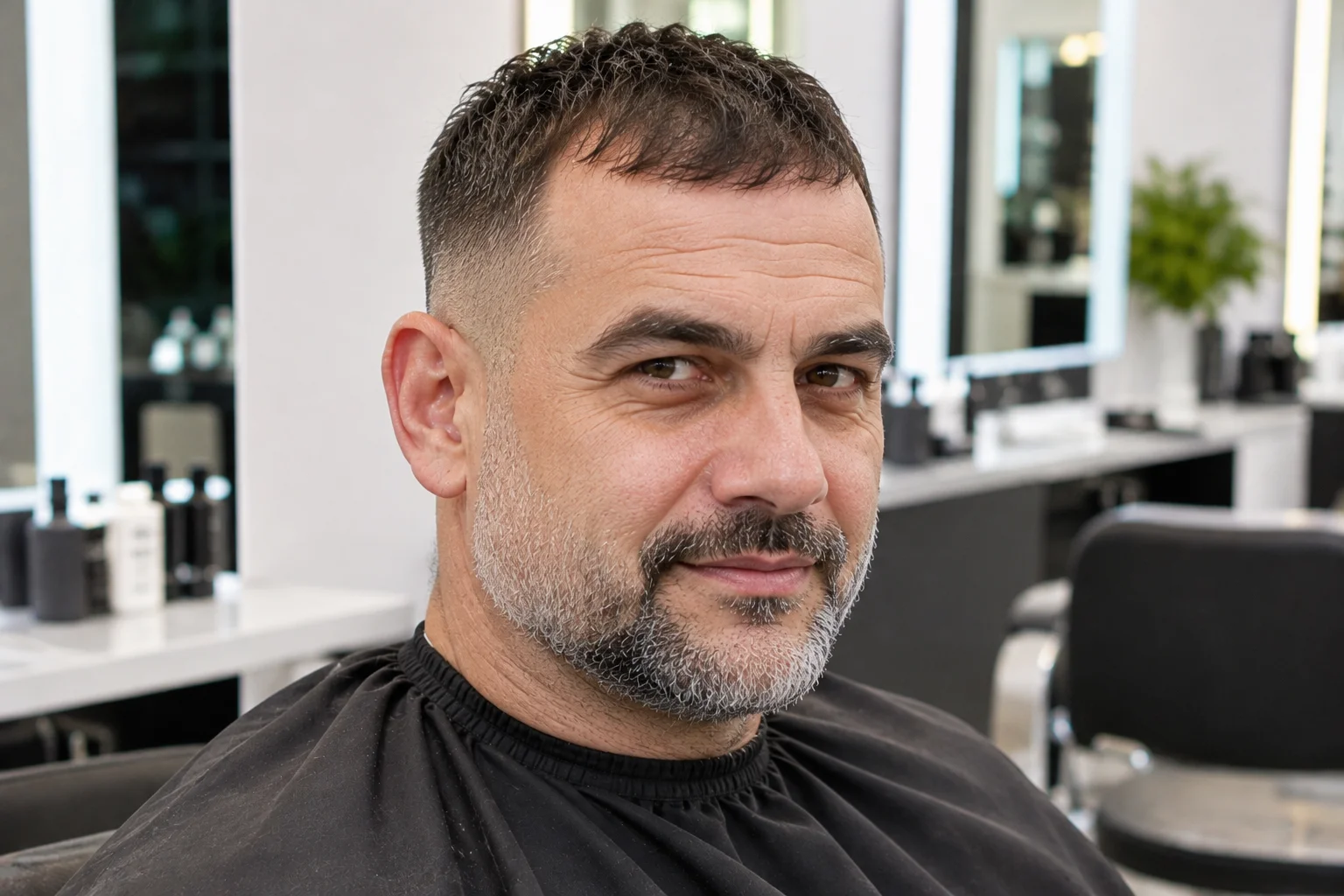
The Caesar cut takes short hair on top and brushes it forward, with a short, straight fringe at the forehead. That forward direction does something clever. It covers the corners of a receding hairline instead of pulling hair back and exposing them, so the hairline looks straighter than it really is.
A friend of mine fought his hairline for years with longer styles that he swept back. The first time he tried a Caesar, he laughed in the chair because the problem he had been hiding was simply gone from view. Keep the fringe short and textured rather than heavy and straight, and use a little matte paste to keep the front in place.
The Best Cut for a Thinning Crown
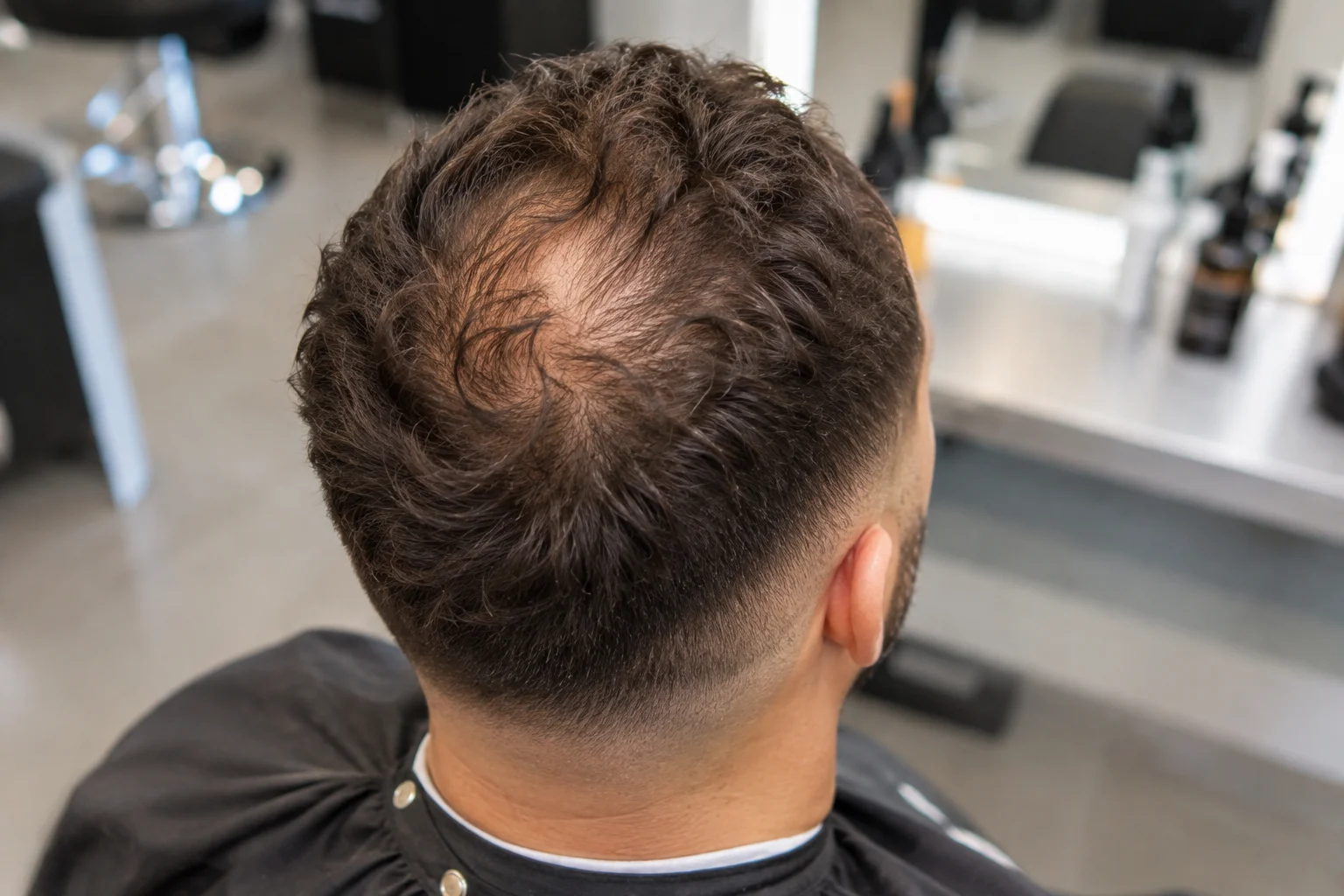
The crown is the hardest spot to hide because you cannot see it yourself and every overhead light shows it. The trick is not to grow the hair over it. Long hair around a thin crown just flops apart and draws attention to the gap. Instead, keep the top short and textured, and let the barber blend the crown area so the hair around it matches in length. The contrast disappears, and the crown stops standing out in photos.
I learned this the hard way. For a long time I kept the back long to cover my crown, and every photo from above told the truth anyway. When my barber finally cut it short and blended it, the crown stopped being the first thing I checked in the mirror. A low taper fade on the sides keeps the shape tidy while the top stays short enough to blend.
Fine, Wavy Hair: Work With the Wave
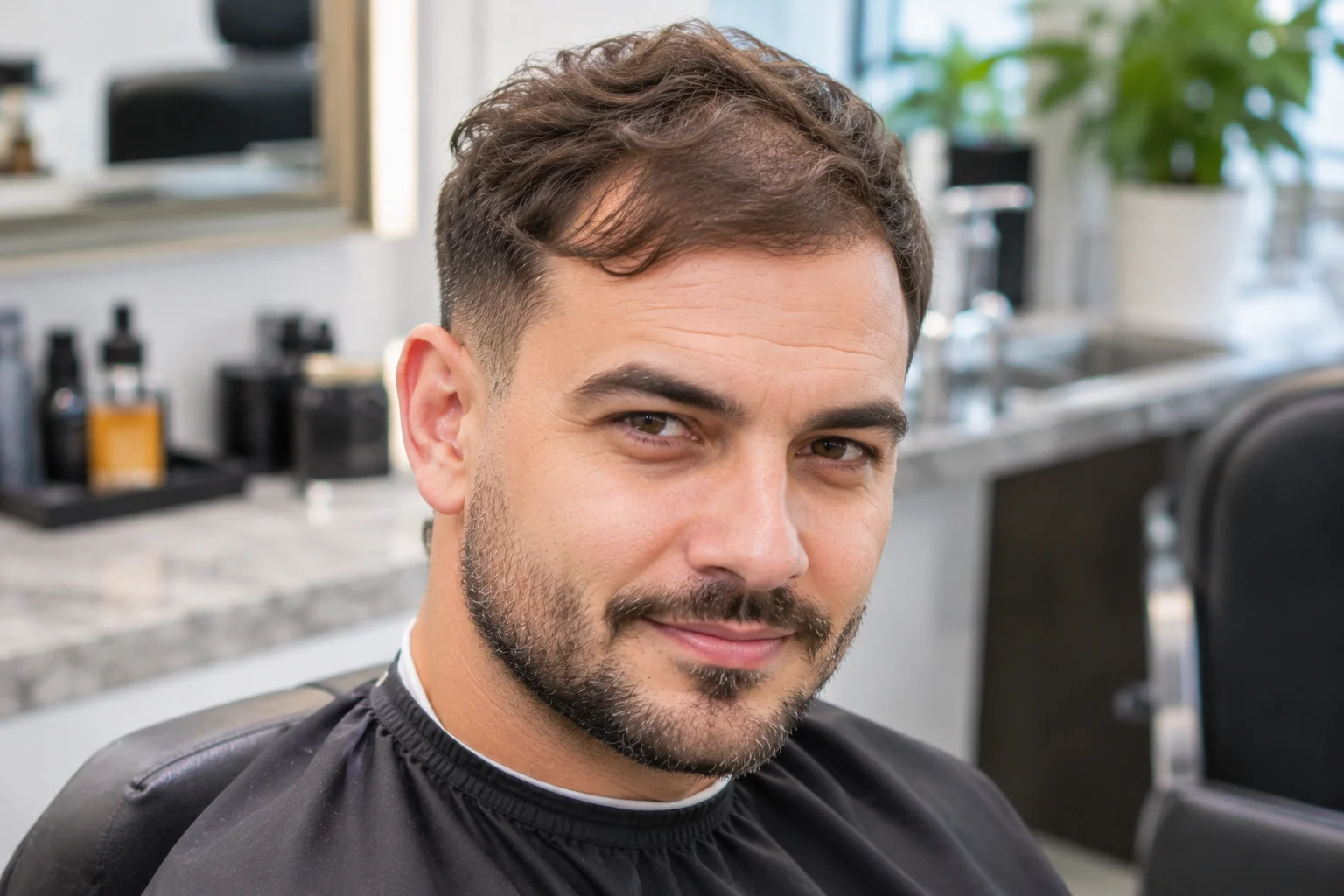
If your hair is fine but wavy, you have a natural advantage. Waves bend light and create volume that straight fine hair cannot manage. The mistake is cutting the wave off or weighing it down with heavy product. Keep some length on top, around two to three inches, and ask for light layers that let the wave move, with shorter sides to keep the shape from going wide.
My hair has a loose wave, and for years I fought it with straight, heavy styles that went flat by lunch. The day I let the wave do the work, my hair looked thicker with less effort. A little sea salt spray on damp hair and a rough dry with my fingers is enough, so skip heavy gels and oils that pull fine waves down.
The Classic Side Part for Older Men
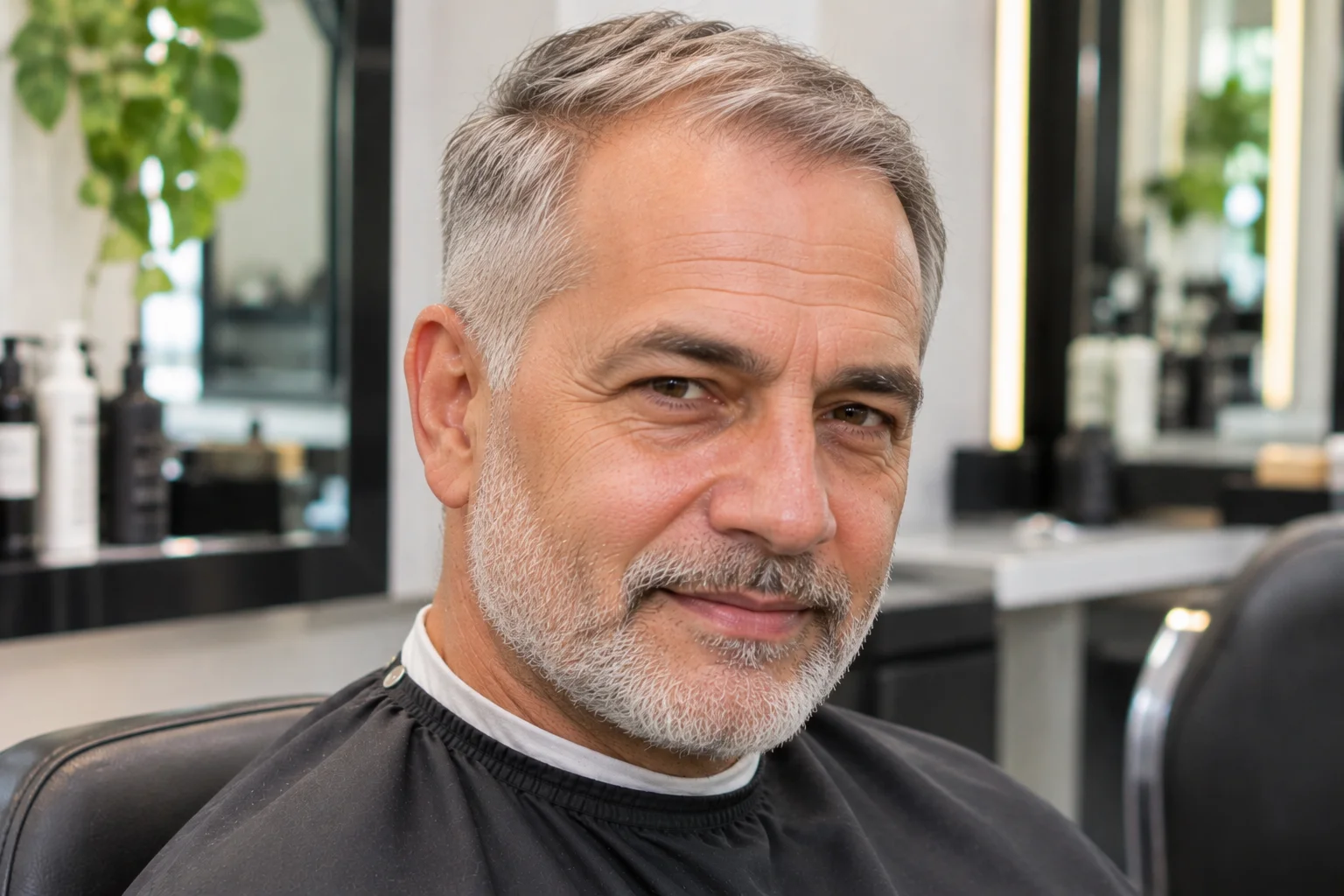
The side part never really goes out of style, and it suits older men with thinning hair better than most trendy cuts. A neat part on the side, a little length swept across the top, and tapered sides give a polished look that works at the office and at a wedding. It also suits a range of face shapes, and if you have an oval face, our guide to the best haircut for oval face men shows how the proportions work with your features.
I watched my father wear a side part for decades, and it always looked right because it never tried to be something it was not. When my own hair started thinning, I tried the same cut with a slightly shorter top, and it gave me the same clean, put-together feeling without any fuss. Use a light pomade with a natural shine, and comb it into place when damp so it holds without looking stiff.
How to Style Thinning Hair for More Fullness
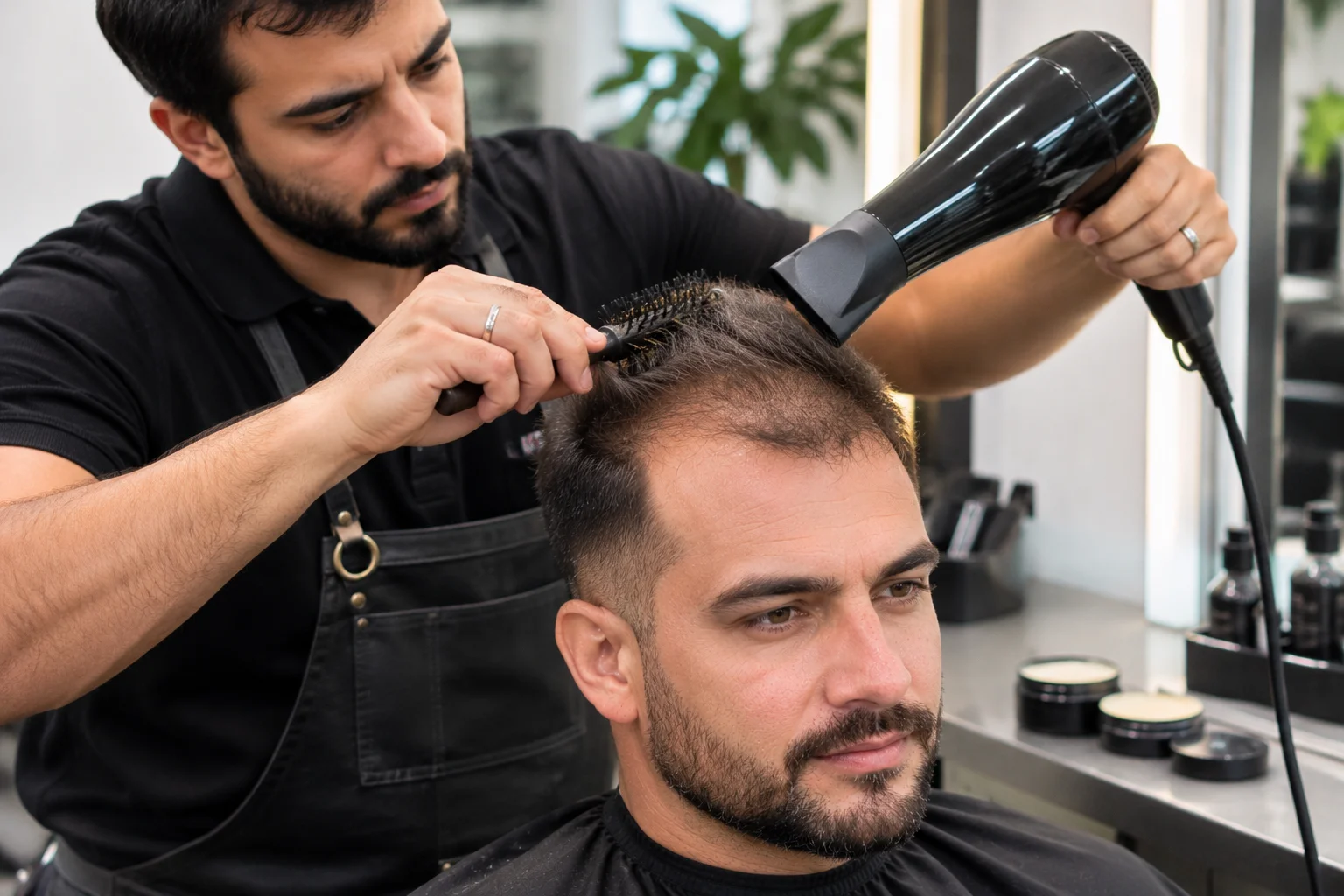
The cut does half the job, and styling does the other half. Start with clean, towel-dried hair, and blow dry on a low heat setting while you push the hair up and forward with your fingers. Heat lifts the roots, and that lift is what makes thin hair look full. Once it is dry, work a small amount of matte clay or paste through the top only, and keep product away from the roots if your hair gets greasy fast.
I used to put product on wet hair and wonder why it went flat. The change came when a barber showed me the blow dry trick. Two minutes with a dryer, hair pushed forward with my fingers, and the same cut looked twice as thick. Avoid heavy waxes and shiny gels, which clump fine hair together and expose the scalp, and wash out product at night so it never builds up.
When Nothing Hides It: The Shaved Head Option

Here is the honest part. Sometimes thinning reaches a point where no cut can hide it, and chasing coverage starts to look worse than the thinning itself. A thin comb-over, long strands pulled across a bare crown, or hair grown long to hide a hairline all draw the eye to exactly what you wanted to hide. If you are spending more time arranging your hair than enjoying your day, it may be time to consider the shaved head.
I have not shaved my own head yet, but I have seen friends do it, and the relief on their faces was real. One of them told me he wished he had done it two years earlier, because the worry was worse than the result. A shaved head looks clean and deliberate. Keep the shape tidy with a weekly trim, protect your scalp with sunscreen, and grow a short beard if you want balance.
Frequently Asked Questions
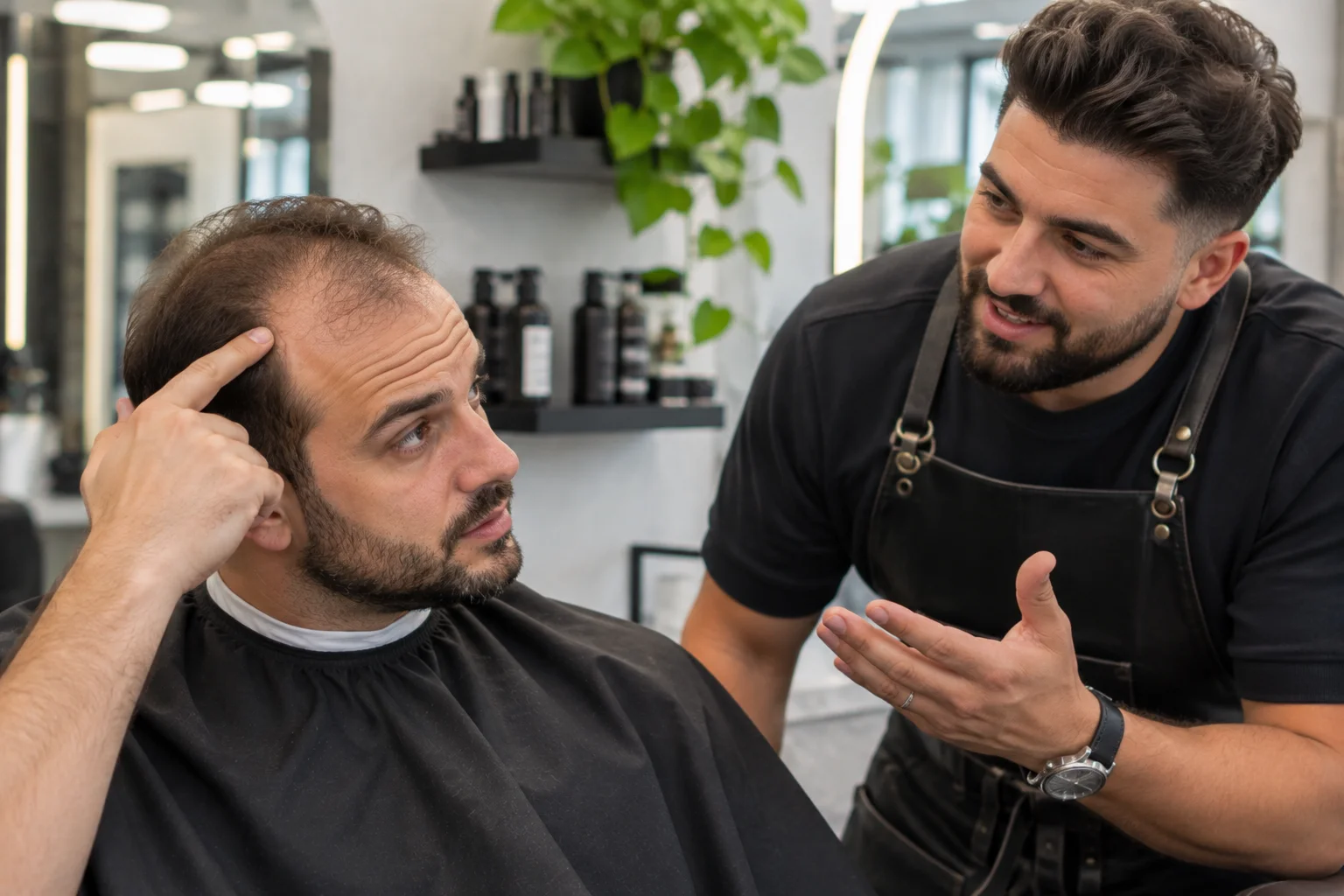
These are the questions I hear most often from men dealing with thinning hair, and the answers I give them.
A short textured crop or a buzz cut usually works best. Both keep the hair even and add texture, which makes thin areas look fuller. The right choice depends on your hairline and how much coverage you still have, so show your barber photos of cuts you like and ask what suits your hair.
Usually not. Longer hair is heavier, so it lies flat and separates, which exposes the scalp more. Shorter, textured hair stands up better and covers more scalp. The only exception is wavy hair, where a little extra length can add volume.
No, a fade usually helps. Short, clean sides create contrast that makes the top look thicker, and a low taper fade grows out more gracefully than a high skin fade. Just keep the fade balanced with the length on top so the cut looks intentional.
Matte clay, light paste, sea salt spray, and volumizing mousse all add texture without weight. Use a small amount on dry hair, and avoid heavy waxes or shiny gels, which clump fine hair together and show the scalp.
Every three to four weeks is a good rhythm for most short styles. Thinning hair loses its shape faster than thick hair, and regular trims keep the texture and the fade looking sharp. Buzz cuts may need a tidy-up every two weeks.
Thinning hair does not end your options. It just changes the rules, and once you know them, the choice gets easier. Keep the sides neat, add texture on top, and let the cut do the covering instead of your comb. Show your barber this guide, talk honestly about what bothers you, and try one of these styles for a month. The right cut will not give you your old hair back, but it can give you something better, a style you do not have to think about.




- Be Respectful
- Stay Relevant
- Stay Positive
- True Feedback
- Encourage Discussion
- Avoid Spamming
- No Fake News
- Don't Copy-Paste
- No Personal Attacks
- Be Respectful
- Stay Relevant
- Stay Positive
- True Feedback
- Encourage Discussion
- Avoid Spamming
- No Fake News
- Don't Copy-Paste
- No Personal Attacks
