How to Find Your Face Shape for a Haircut
Published: 4 Nov 2026
Finding the right haircut starts before the clippers come out. When you know how to find your face shape for a haircut, you can explain what you want in plain words, avoid a cut that fights your features, and leave the chair with a style you can repeat at home. This guide shows you a quick mirror check, four simple measurements, and the seven common face shapes, so you can match your shape to a haircut with confidence.
The Quick Mirror Method to Find Your Face Shape

Stand in front of a mirror in good light, pull all your hair back from your face, and look straight ahead. The outline you see, not your hairstyle, is your starting point. Note the widest part of your face, whether your jaw looks rounded or angular, and whether your face looks longer than it is wide. A straight-on photo with no filter, no hat, and no glasses can help, because it freezes the outline and stops you from turning your head.
From my chair, the mirror check works best when you stop trying to fit one perfect label. Most men I see are a blend, such as a round face with a slightly longer chin or a square face with soft corners. I trace the outline with a finger in the mirror first, then I check the measurements below, because the outline alone can mislead you when your hair is thick or your beard is full.
How to Measure Your Face in 4 Steps
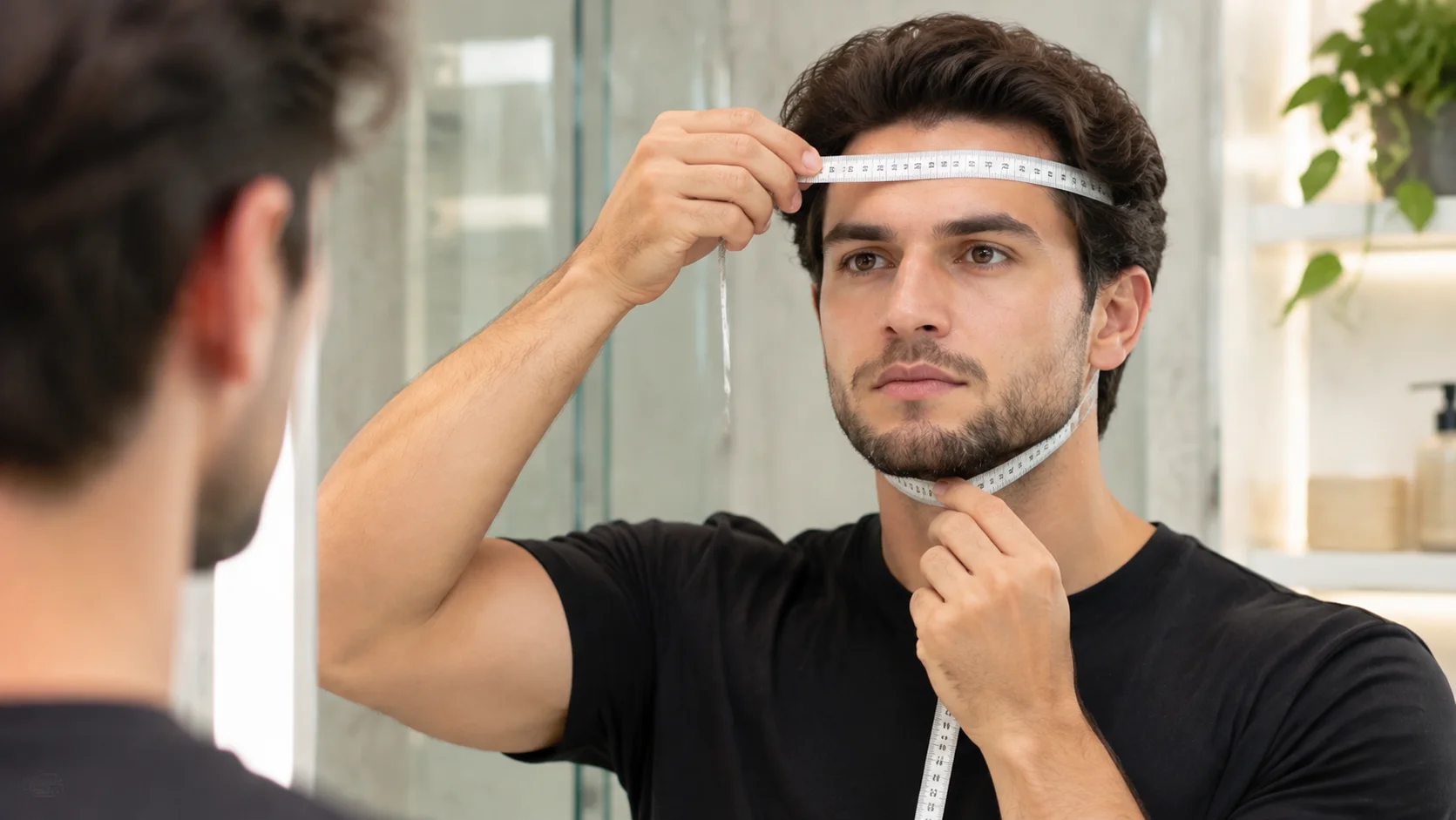
Use a soft tape measure and write down four numbers. First, measure across your forehead at its widest point. Second, measure across your cheekbones. Third, measure from the tip of your chin to just below your ear, then double that number for your jawline. Fourth, measure from the center of your hairline to the tip of your chin for your face length. Compare the numbers: the widest measurement and the length tell you most of the story, and the jaw shape tells you the rest.
In my own routine, I measure twice and keep the tape flat, not tight, because pulling it in changes the jaw number most. If two measurements are close, I trust the widest point and the jaw corner more than a small difference in length. That is how I avoid calling a slightly long round face an oval face, which would point you to the wrong cut.
The 7 Face Shapes at a Glance
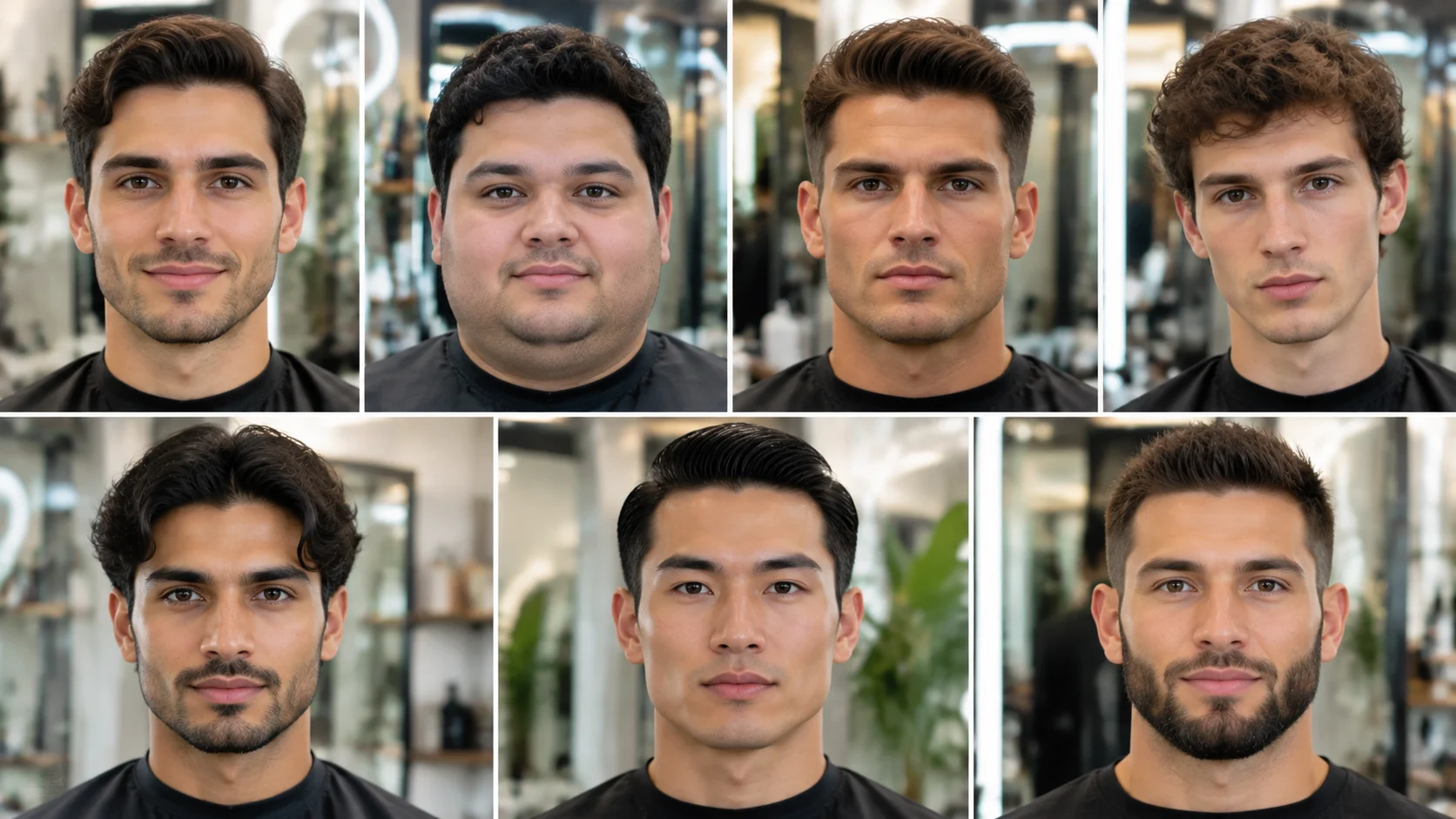
There are seven shapes most barbers use as a starting point. Oval faces are slightly longer than they are wide, with a forehead and jaw that are similar in width. Round faces are about equal in length and width, with full cheeks and a soft jaw. Square faces have a forehead, cheekbones, and jaw that are close in width, with a strong, angular jaw. Rectangle faces are longer than they are wide, with a straight cheek line. Triangle faces are widest at the jaw, with the narrowest point at the forehead. Heart faces have a wider forehead and a pointed chin. Diamond faces are widest at the cheekbones, with a narrower forehead and jaw and a pointed chin.
From my chair, I do not let one shape decide everything. Hair type, hairline, glasses, and how much time you want to spend styling all change the choice. A round face with thick hair needs different texture than a round face with fine hair, even though the outline is the same. Use the shape as a guide, then check the cut against your daily routine.
Best Haircuts for Each Face Shape
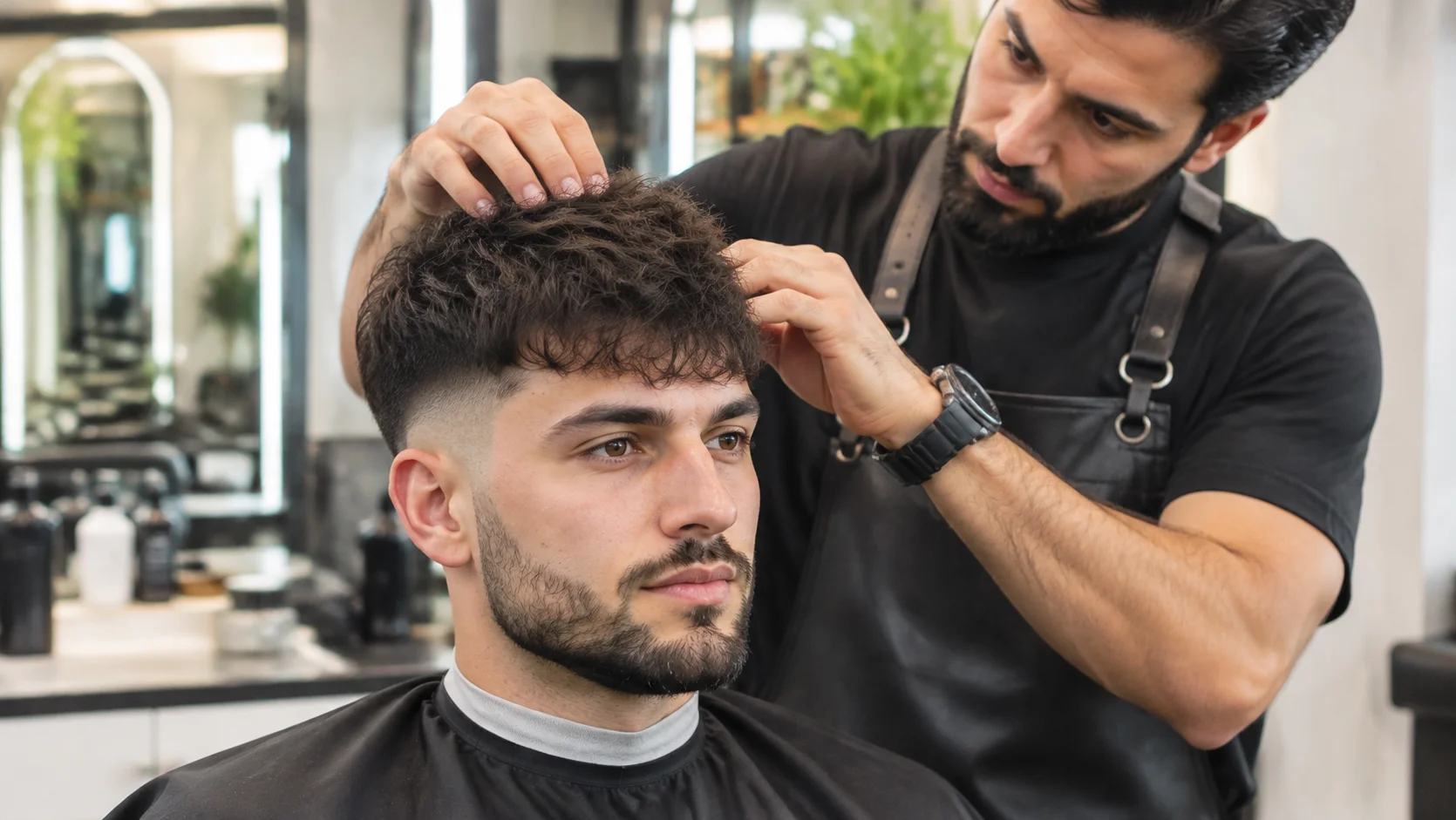
Oval faces can carry most cuts, from a crew cut and side part to a quiff, pompadour, or textured crop, because the proportions are already balanced. Round faces look best with height and angles on top, such as a high fade with volume, an angular fringe, or layered texture that lengthens the face. Square faces suit a textured crop, a side part with a medium fade, or a slick back that keeps the strong jaw without adding bulk. Rectangle faces need width at the sides, so try a side swept fringe or mid length layers, and avoid very tall pompadours that make the face look longer.
Triangle faces benefit from longer fringe, a quiff, or layered scissor cuts that add width at the forehead and balance a wider jaw. Diamond faces suit layered side parts, textured fringe, or swept back styles that balance the cheekbones without narrowing the forehead or jaw too much. Heart faces suit a side part, long layers below the chin, or curtain bangs that soften the forehead and balance a pointed chin. If you have a round face, read our detailed guide to the best haircut for round face men before your next appointment.
What to Tell Your Barber

Say your shape, your widest point, and the result you want in one short sentence, such as: I have a round face, my cheeks are widest, and I want height on top with clean sides. Show a straight-on photo and a side photo, name the cut, the fade level, and how much length you want to keep on top. Ask about products too, because pomade, wax, cream, or texture powder can change how the same cut sits, and regular touch-ups keep the shape from growing out unevenly.
From my chair, the best appointments start with a photo, not a long speech. I can see the hairline, the crown, and how the hair falls in a second, and then your words tell me what to keep and what to change. If a barber cannot repeat your plan back to you in plain words, pause and clarify before any hair is cut.
Common Face Shape Mistakes to Avoid
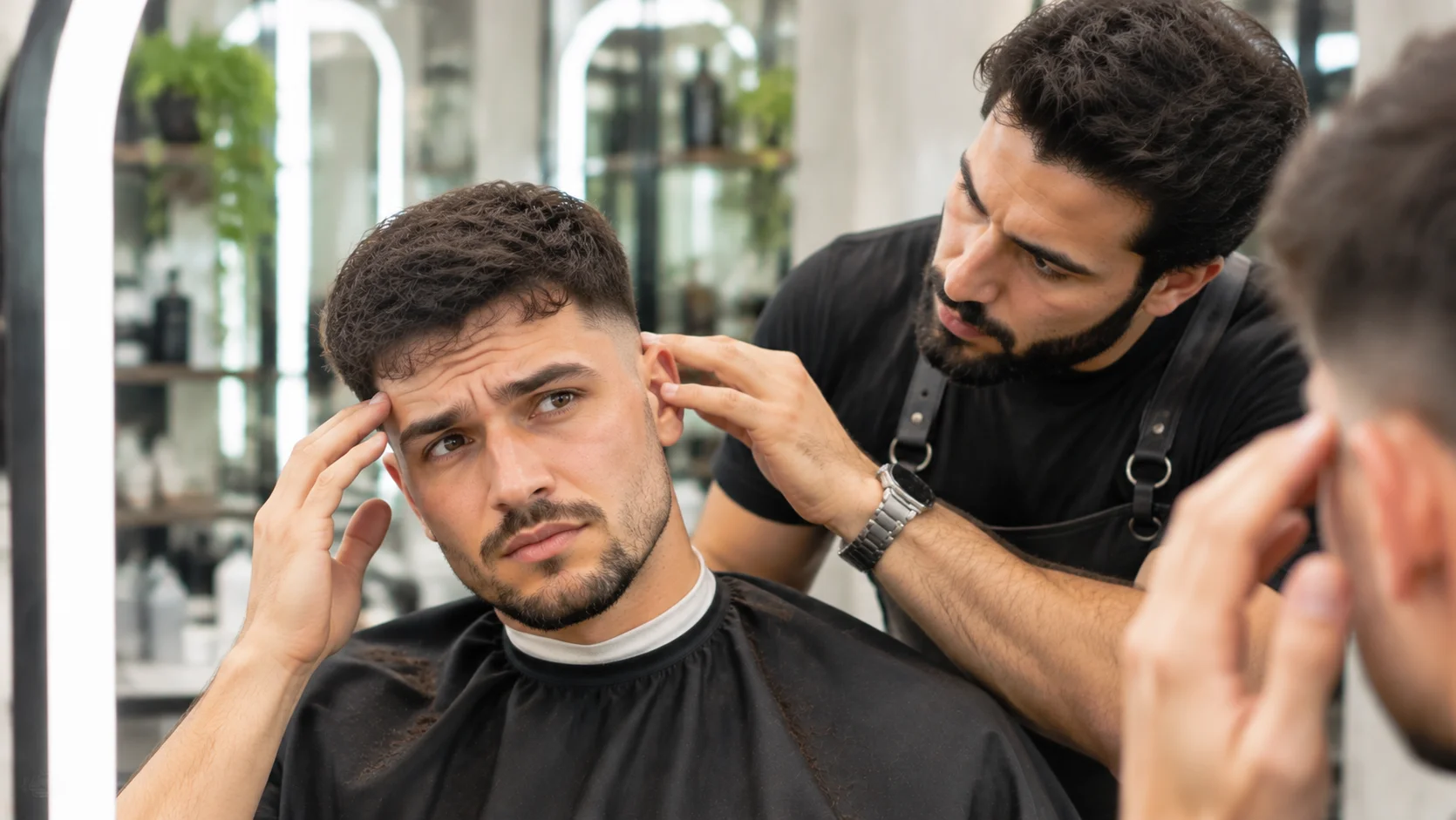
Avoid choosing a cut from a photo alone, because a style that suits a model with a different shape, hair type, or hairline may not suit you. A blunt cut at cheek level can widen a round face, a heavy blunt line at the jaw can harden a square face, and long straight hair with a center part and no layers can make a long face look longer. A crown with too much volume and very tight sides can unbalance a heart face, and very short sides can make a rectangle face look longer still. Check the cut from the front and the side, not just from one angle.
From my chair, the fix is usually smaller than people expect. A little more height, a softer line, or a bit more texture at the sides can change the whole balance. If a cut feels wrong after a week, bring photos from the front and side, and ask what one change would fix the proportion, instead of starting over with a completely new style.
Frequently Asked Questions

Pull your hair back, stand in front of a mirror in good light, and look straight ahead. Note your widest point and your jaw shape, then take the four measurements in this guide: forehead, cheekbones, jawline, and face length. Compare those numbers to the seven shapes, and use the closest match as your starting point.
Match the cut to the balance you need. Oval faces can try most styles. Round faces need height and angles. Square faces suit softer texture. Rectangle faces need side width. Triangle faces need forehead width. Diamond faces need balance at the cheekbones. Heart faces need softness at the forehead and length below the chin.
Yes. A barber can check your widest point, jaw shape, and hairline in person, and can see how your hair falls and grows. Bring a straight-on photo too, so the barber can explain the shape and the cut in plain words before cutting.
That is normal. Many faces are a blend of two shapes. Use the widest point and the jaw shape to pick the closest match, then choose a cut that fixes the balance you want most, such as more height for a round face or more width for a long face.
Apps and AI tools can give a useful starting point, especially from a straight-on photo with good light. Treat the result as a suggestion, not a final answer, and check it against the mirror and the four measurements before you book a cut.
Conclusion: Find your face shape first, then choose the cut that balances it. A quick mirror check and four measurements give you a clear starting point, and a short, plain explanation helps your barber get it right the first time. If you are still unsure, start with the closest shape, keep a little length on top, and adjust at your next visit, because a good cut is a balance, not a label.
Related reading: Best Haircut for Round Face Men
Related reading: Mid Taper Fade vs Mid Fade: The Clear Difference for Men


- Be Respectful
- Stay Relevant
- Stay Positive
- True Feedback
- Encourage Discussion
- Avoid Spamming
- No Fake News
- Don't Copy-Paste
- No Personal Attacks
- Be Respectful
- Stay Relevant
- Stay Positive
- True Feedback
- Encourage Discussion
- Avoid Spamming
- No Fake News
- Don't Copy-Paste
- No Personal Attacks
