Caesar Cut Men Thin Hair: A Simple Guide to a Fuller Look
Published: 9 Nov 2026
Thin hair can make a simple haircut feel like a big decision. When the top looks thin, a longer style can separate and show more scalp, and a very short style can leave the hairline exposed. A Caesar cut men thin hair fans choose sits in the middle. It is short, neat, and brushed forward, so the hair covers the front in a clean line and the sides stay tidy.
In this guide you will learn what a Caesar cut is, why it helps thin hair look fuller, what length and fringe to ask for, the best variations, the face shapes it suits, what to say to your barber, how to style it with light product only, and how to keep it fresh. Bring this guide, or a photo, to your next appointment, and you will leave with a clear plan.
What Is a Caesar Cut for Men?
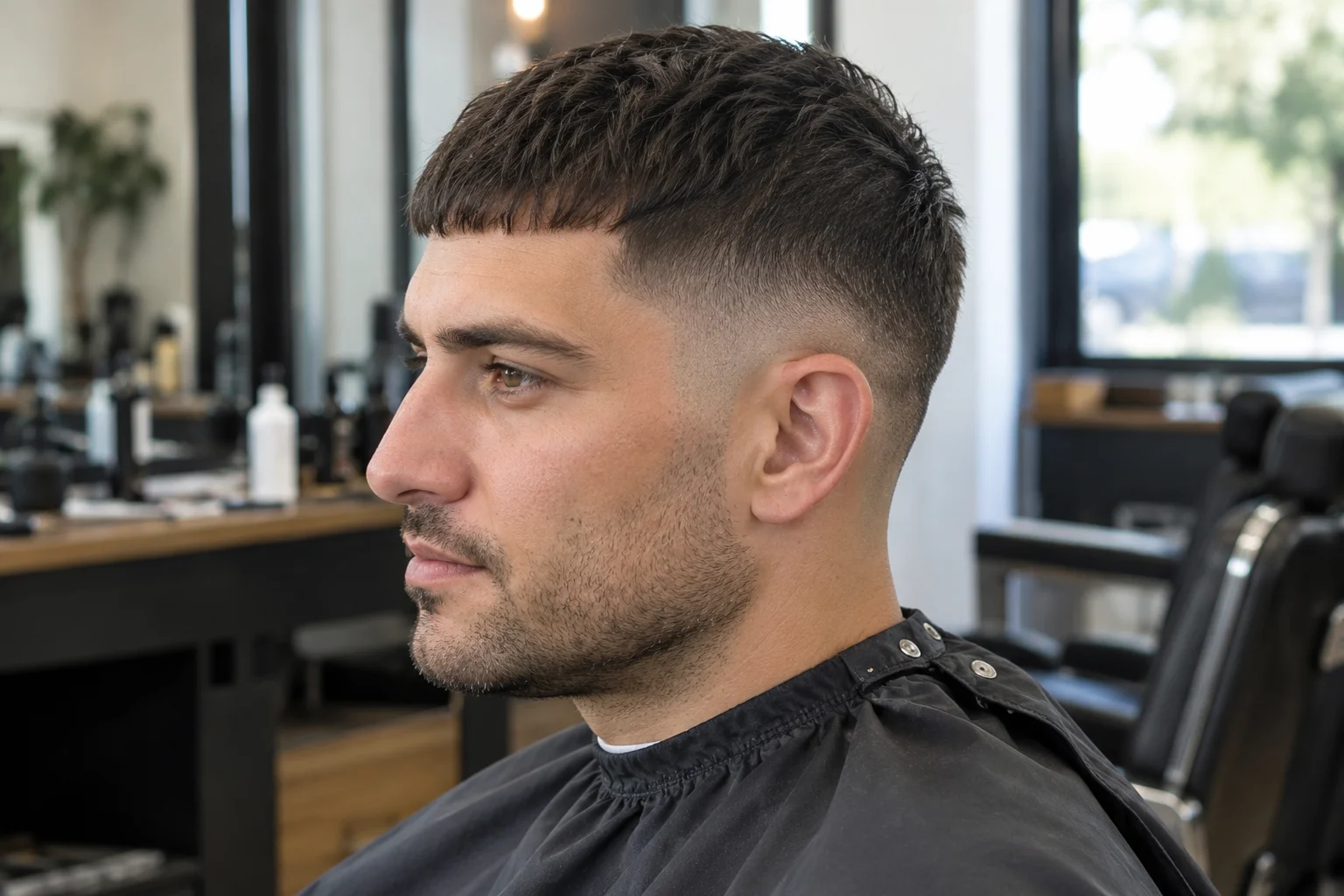
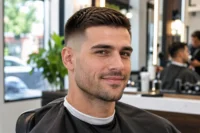
A Caesar cut is a short men’s haircut with a short, straight fringe brushed forward. The top is usually 1 to 2 inches long, the sides and back are short and even, and the hair at the front forms a straight, horizontal line. It is named for Julius Caesar, who wore his hair forward, and the modern version keeps that same idea with a cleaner finish.
From my chair, the first thing I check is the fringe line. If it is straight and even, the cut looks tidy from the front. If the fringe is cut too short, the hairline shows more, and if it is left too long, it can flop into the eyes. A straight fringe that just touches the forehead is the easiest place to start.
Why a Caesar Cut Suits Thin Hair
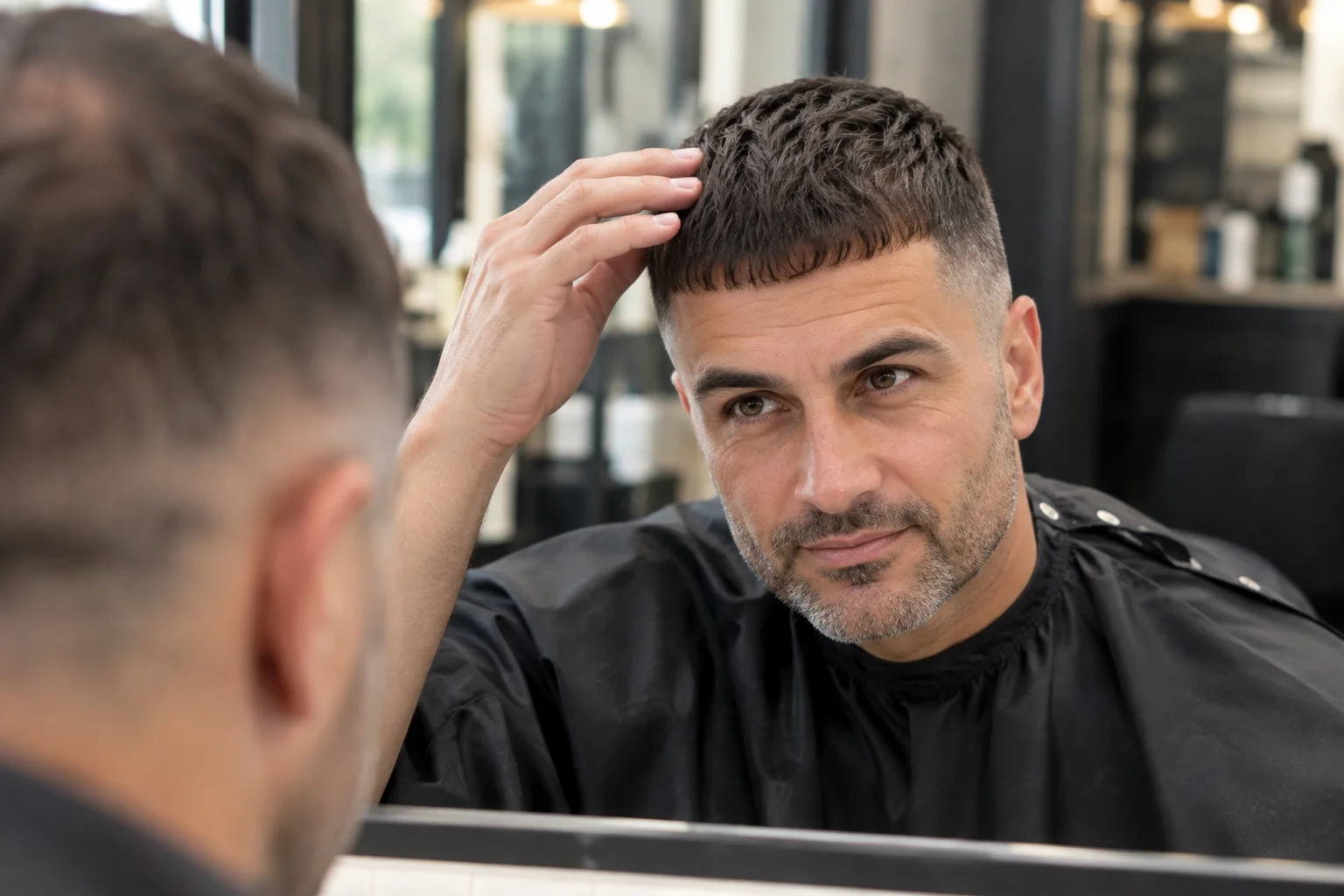
A Caesar cut suits thin hair because it works with the hair you have, instead of fighting it. The forward fringe covers the temples and softens the hairline, so a receding hairline looks less sharp. The short, even length on top and at the sides keeps the shape balanced, so no one area looks much thinner than the rest.
Thinning hair is common, and it often starts at the temples and the crown. About two out of three men see some hair loss by the age of 35, and about 85 percent see it by the age of 50. A good cut cannot bring hair back, but it can change how full the hair looks. That is the honest promise of a Caesar cut, and it is why so many barbers suggest it first. For more styles that add fullness, see our guide to the best haircuts for thinning hair men.
From my chair, men with thin hair are often happiest when the cut is simple and the fringe does the work. I keep the top a little longer at the front than at the back, so the fringe has something to fall forward from. I avoid heavy thinning scissors on thin hair, because removing hair to create texture can leave the top looking even thinner.
Caesar Cut Length and Fringe
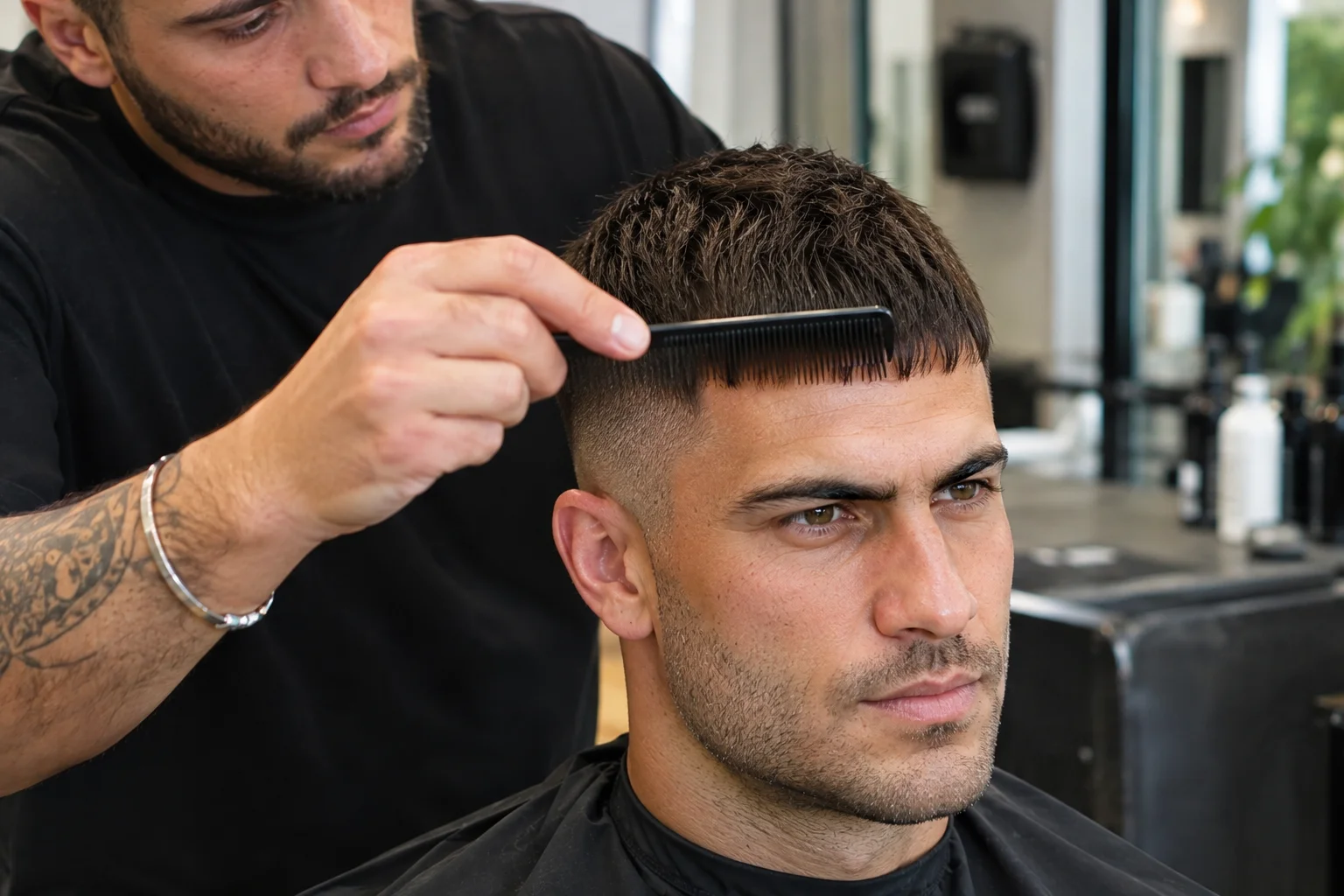
The length on top is the first choice to make, and it changes the whole look. A short Caesar cut keeps the top at 0.5 to 1 inch long. It is the easiest version to wash and wear, it needs almost no styling, and it suits hot weather and busy mornings. A classic Caesar cut keeps the top at 1 to 2 inches long. That is the best length for most men with thin hair, because the fringe has enough length to cover the front without looking heavy.
Best Caesar Cut Variations to Try
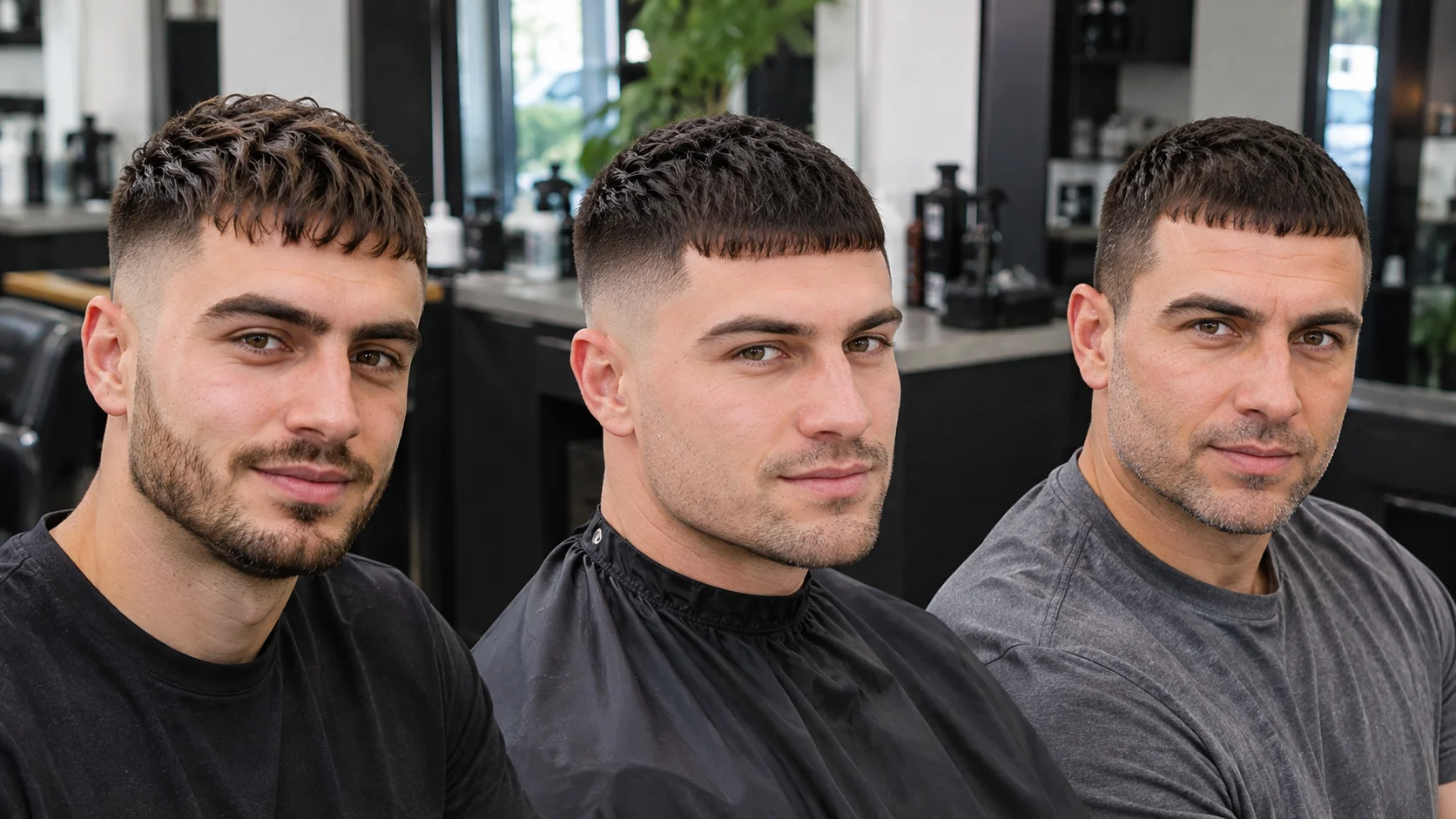
The classic Caesar cut is the starting point, but the same short shape can be changed in many ways. The right variation depends on your hair type, your face shape, and how much time you want to spend on it in the morning. A crew cut is a close alternative if you want even less fringe, and a textured crop is a close alternative if you want a softer, choppier front.
Textured Caesar
A textured Caesar is the most popular modern version. The top is cut with uneven layers and point cutting, so the hair has separation and movement instead of one flat line. Texture makes thin hair look thicker, because the eye sees many small pieces instead of one smooth surface. It also stops the cut from looking like a helmet, and it works well with a small amount of matte clay.
Caesar With a Low Fade
A Caesar with a low fade keeps the fade low, just above the ears, so the change from short sides to longer top is gentle. It is clean and safe for school and office, and it grows out smoothly. A low fade is the most requested fade with a Caesar cut, because it adds shape without drawing attention away from the top.
Caesar With a Taper or No Fade
A taper is softer than a fade, because the hair gets shorter slowly near the neck and ears, and it keeps the classic, professional feel. A taper is a good choice if you want a cleaner neckline without a strong fade line, and if you want the cut to last longer between visits. A classic Caesar with no fade has the same short length on the sides and back, and it is the lowest maintenance version of all.
From my chair, I start most men with thin hair on a textured Caesar with a low fade or a low taper. It gives the fullest look with the least effort, and it is easy to change next time. If you want a bolder look, we can raise the fade, but I would not start with a skin fade on very thin hair, because the contrast can make the top look thinner by comparison.
Caesar Cut for Your Face Shape
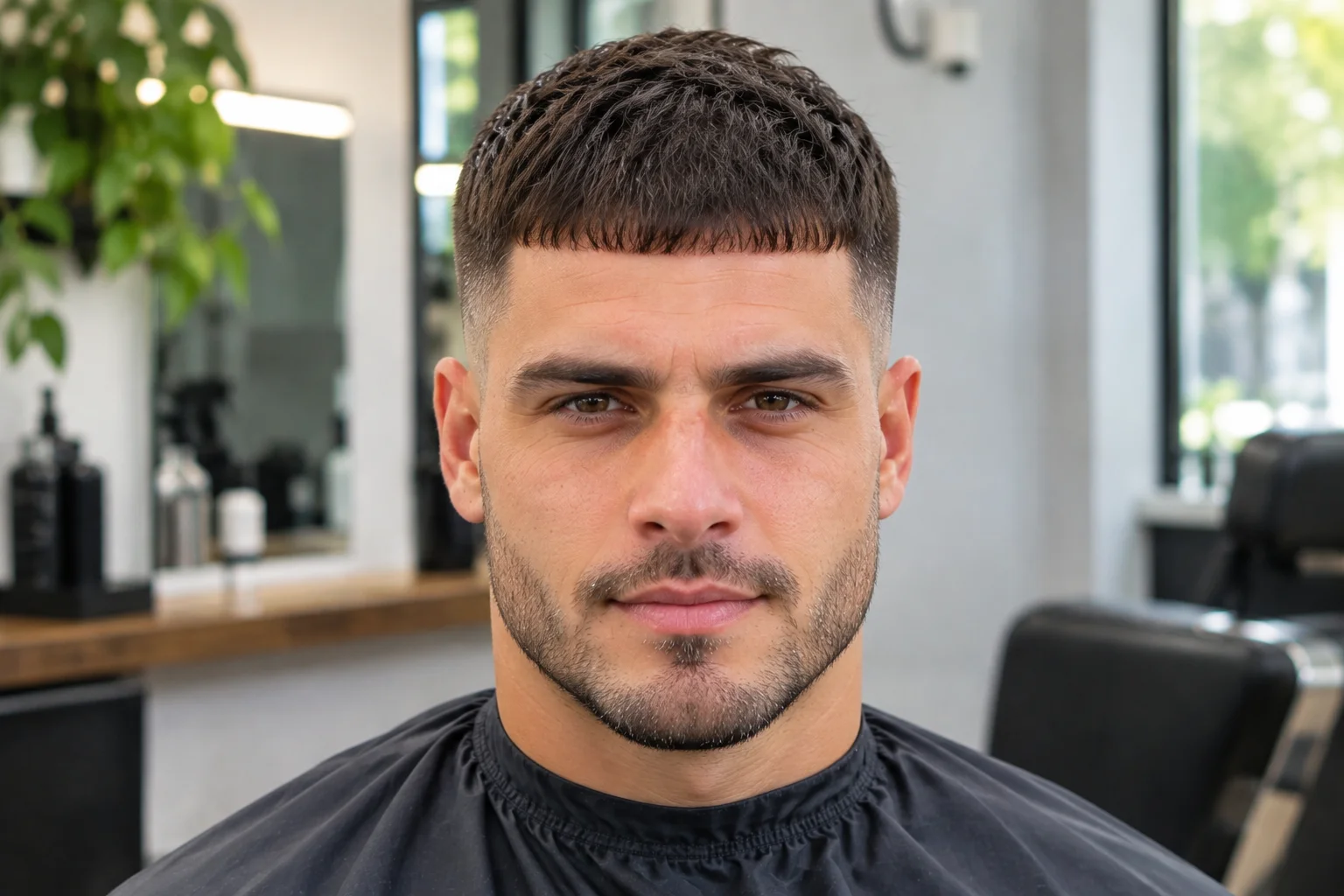
A Caesar cut suits most face shapes, which is one reason it has lasted so long. It works best on oval, square, and heart shaped faces, because the straight fringe balances the forehead and the jaw. It also suits round faces, because the horizontal fringe can make a round face look a little longer, and diamond faces, because the clean sides keep the cheekbones in balance.
How to Ask Your Barber for a Caesar Cut

The best way to ask for a Caesar cut is to be clear about four things: the length on top, the fringe, the sides, and the finish. A simple request is: I would like a modern Caesar, with a textured top, a natural fringe, and a low taper, with no hard lines. Then add the details. Say how long you want the top, such as 1 to 2 inches, and whether you want a low fade, a taper, or no fade at all.
From my chair, a photo and three short sentences are enough. I want to hear the length on top, the fringe you want, and the sides you want, and then I want to see a photo. If you are not sure about the fade, say so, and we can start low and raise it next time. It is much easier to go shorter later than to fix a fade that was cut too high.
How to Style a Caesar Cut at Home

A Caesar cut needs very little styling, and most days you can leave it as it is. Start with clean, towel dried hair. Take a pea sized amount of matte clay or light cream, warm it between your hands, and press it through the top with your fingers, pushing the fringe forward. Do not slick it back, and do not use a heavy, shiny gel, because shine can make thin hair look thinner. If you are not sure which product fits you, read our guide to hair gel vs pomade vs clay.
How to Maintain a Caesar Cut
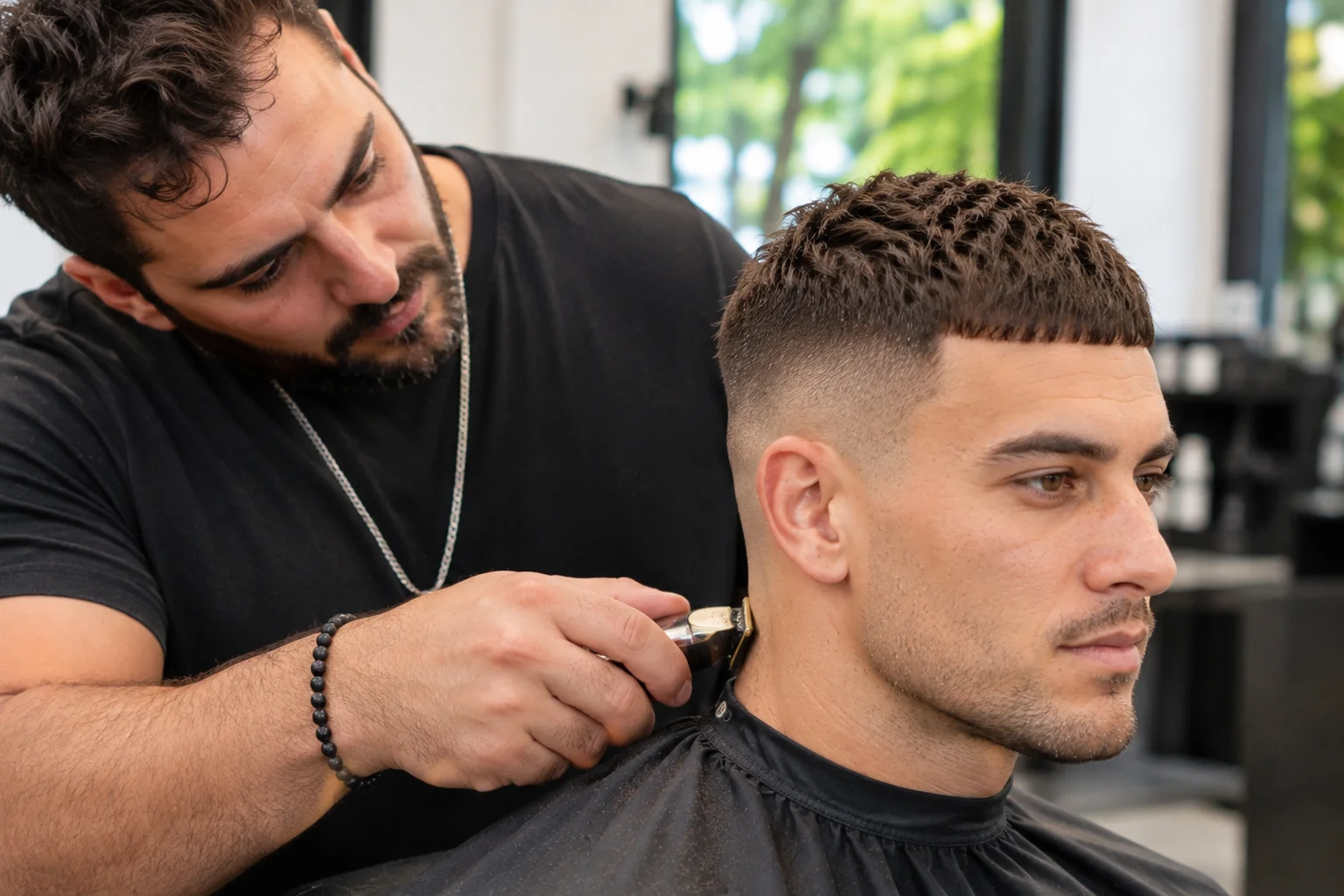
A Caesar cut is easy to keep, but it only stays sharp if you trim it on time. Book a trim every 3 to 5 weeks, and book sooner if you have a low fade, because the sides grow out first and the clean shape softens fast. Wash your hair with a mild shampoo and keep the product light, so the top does not look flat or greasy. A pea sized amount of matte clay is enough, and heavy gel can make thin hair look thinner. Brush the fringe forward each morning and check it in the mirror, because the fringe grows out first and can start to fall into your eyes. If the fringe feels heavy or the sides look puffy, it is time for a trim, not a restyle.
From my chair, the men who keep the cleanest Caesar cuts are the ones who book the next trim before they leave the chair. It takes one minute, and it stops the cut from growing out into a shape that is hard to fix. If you wait too long, the sides grow out and the fringe gets heavy, and the cut needs more work to bring it back.
Who a Caesar Cut Suits and Who Should Avoid It

A Caesar cut suits men who want a clean, professional look with very little daily effort. It suits men with thinning hair or a receding hairline, men with straight, wavy, or slightly curly hair, busy men, active men, and older men, because it softens the hairline and hides thinning without looking like you are trying to hide it. It also suits men who want a cut that works for work and for the weekend, with the same short shape.
Think twice if your hair loss is very advanced, with large bare areas on top, because a fringe cannot cover what is no longer there, and a buzz cut or a clean shave may look neater. Think twice if you want long hair that flops, flows, or parts heavily, because a Caesar cut is short and forward, and it will not give you that look. Think twice if you want a high skin fade with a very thin top, because the strong contrast can draw the eye to the thin area instead of away from it.
From my chair, the best first step is a classic or textured Caesar at 1 to 2 inches on top, with a low taper. You can always go shorter next time, and you can always raise the fade, but you cannot put the hair back once it is cut. Give the cut two weeks, style it with light product only, and then decide if you want it shorter, longer, or more textured.
Frequently Asked Questions
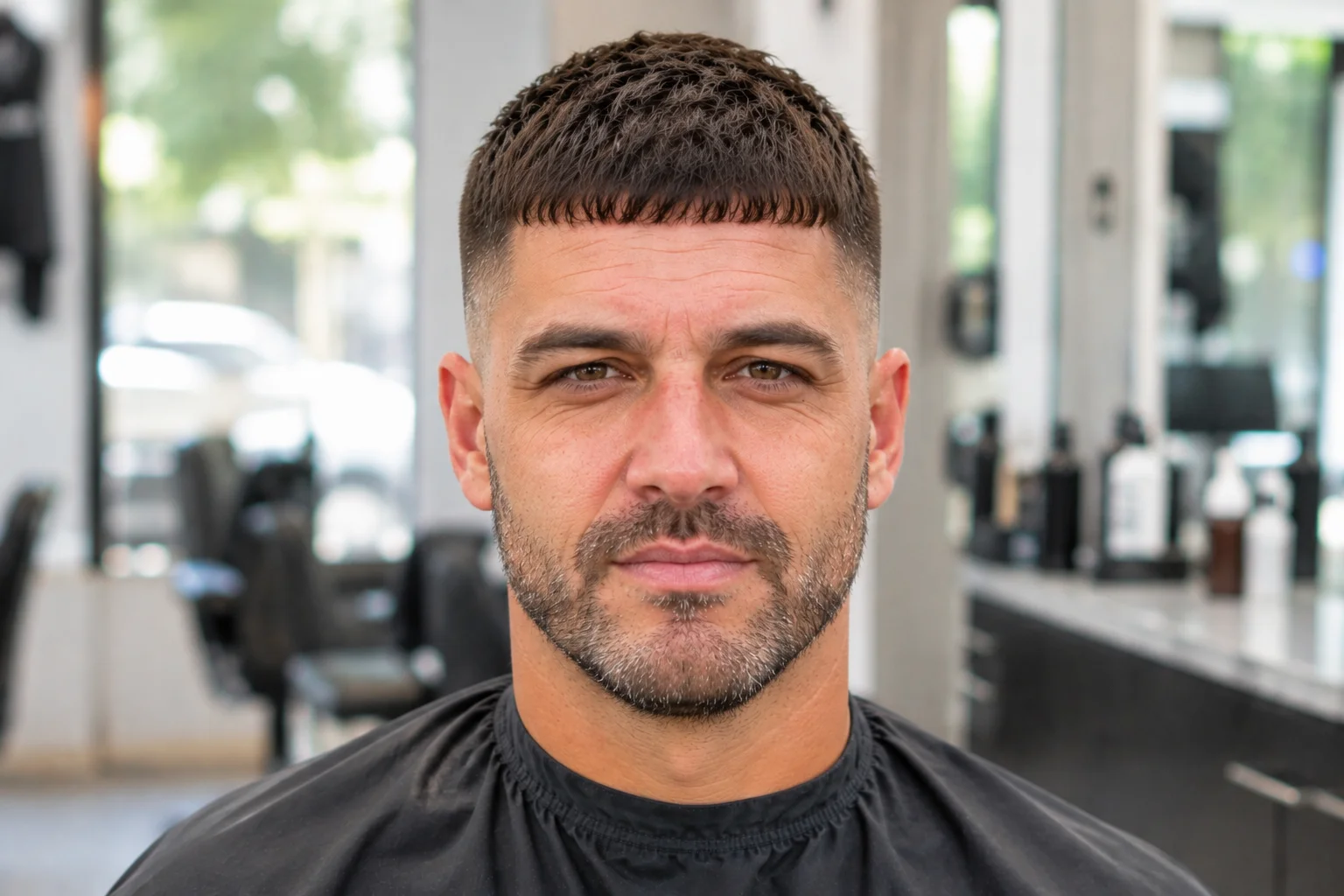
Yes. The short forward fringe covers the temples and softens the hairline, while the short, even length keeps the top and sides balanced. Light texture adds the look of thickness without adding weight, so thin hair looks fuller.
For most men with thin hair, 1 to 2 inches on top is best. That length is long enough for the fringe to cover the front, and short enough to stay neat. A short version at 0.5 to 1 inch is easier to wear, while a longer version at 3 to 4 inches needs more product and more care.
Yes, it softens a receding hairline. The forward fringe covers the temples and brings hair over the area where the hairline has moved back, so the line looks less sharp. It works best when the hair loss is mild to moderate, and the fringe is kept soft, not blunt.
Book a trim every 3 to 5 weeks. A fade looks freshest for about 3 weeks, while a classic Caesar with no fade can last a little longer. The fringe grows out first, so book when it starts to fall into your eyes.
Use a small amount of matte clay or light cream, about a pea sized amount. Warm it between your hands, press it through the top, and push the fringe forward. Avoid heavy, shiny gel, because shine can make thin hair look thinner.
A Caesar cut men thin hair fans choose is hard to get wrong. Keep the fringe forward, keep the sides short, keep the product light, and book a trim every 3 to 5 weeks. If your hair is getting thinner, try the classic length first, bring a photo to your barber, and let the cut do the work for you.




- Be Respectful
- Stay Relevant
- Stay Positive
- True Feedback
- Encourage Discussion
- Avoid Spamming
- No Fake News
- Don't Copy-Paste
- No Personal Attacks
- Be Respectful
- Stay Relevant
- Stay Positive
- True Feedback
- Encourage Discussion
- Avoid Spamming
- No Fake News
- Don't Copy-Paste
- No Personal Attacks
